17 March – 19 July 2015
Practising art in its multifarious forms Bonnard advocated a basically decorative aesthetic. His acute sense of light, his fascination for the bright colours and utopia of the Midi region, perceived as a rediscovered antique paradise, led him to represent his vision of Arcadia, revealing an instinctive and supremely sensitive artist.
The exhibition is divided into eight sections: Japanism, intimacy, the unexpected, photography, portraits, wild garden, colour, and great decorative works.
The Japanese influence is obvious from the early days of his work: outlined forms, flat areas of bright colour, different levels of perspective... as is his interest in intimate themes, like washing or bathing.
Unexpected, strange, phantasmagorical qualities suddenly appear in Bonnard’s paintings, adding a touch of mystery to commonplace scenes. Bonnard was a keen photographer, and his off-centre framings and soft blurring confirm the spontaneity and the aesthetic bias.
When painting family portraits or portraits of his friends, Bonnard staged his models, and also increased the number of self-portraits produced at various po ints throughout his life. Innovative interior views, extending into the outsi de world, juxtapose the house and the "wild garden" in the same space. The discovery of the Côte d'Azur in spired him to become bolder. He intensified his palette, and changed the scale of his paintings.
Bonnard produced major decors for his friends, art dealers and collectors, such as the triptych La Méditerranée [The Mediterranean]
Combining pastoral visions with memories of Antiquity and contemporary scenes, he affirms the autonomy of the picture’s space and the free expression of the painter’s fantasy.
After the numerous Bonnard exhibitions held the world over, the Musee d'Orsay, which manages the artist's output, owed it to itself to devote a retrospective to him that is representative of all his creative periods.
Among the many significant paintings on view will be

Man and Woman (1900, Musée d’Orsay),
in which the artist has depicted his lifelong companion and one of his constant subjects, Marthe de Méligny.
Also featured will be such masterpieces as

The Boxer (Self-Portrait) (1931, Musée d’Orsay)

and The Work Table (1926–1937, National Gallery of Art);
and decorative panels and screens, including

View from Le Cannet (1927, Musée Bonnard)

and Pleasure (1906–1910, Musée d’Orsay).
Pierre Bonnard: Painting Arcadia will offer a fresh interpretation of Bonnard's repertoire, and a reconsideration of the artist as one of the foremost practitioners of modernism.
Bonnard worked in many genres and techniques, including painting, drawing and photography. From the domestic and urban scenes of his early Nabi period to the great elegies of the twentieth century, Bonnard’s output is grounded in a modernity that was transformed by his knowledge of works from other cultures, including Japanese woodblock prints and Mediterranean mosaics.
Among the many significant paintings on view will be
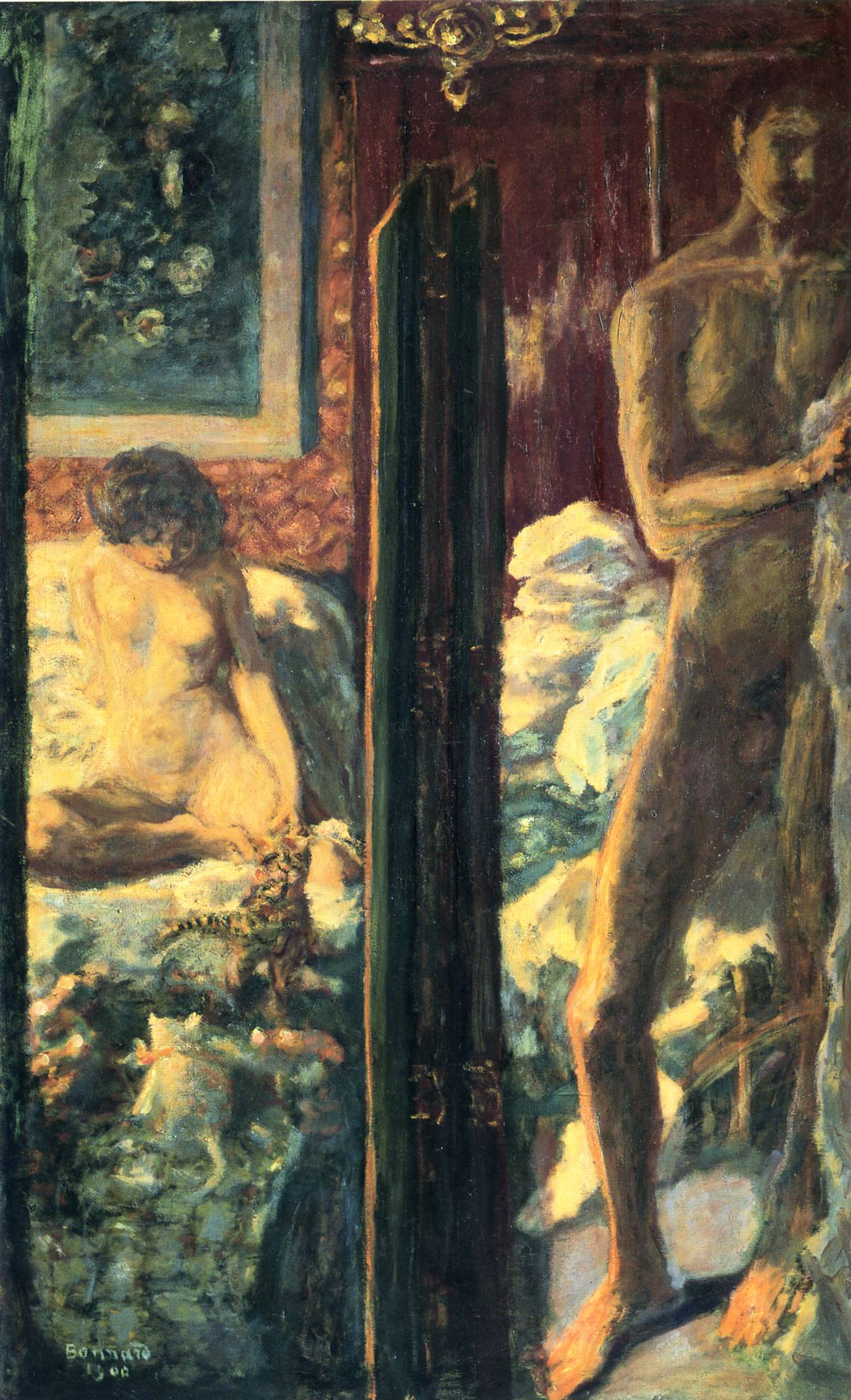
Man and Woman (1900, Musée d’Orsay),
in which the artist has depicted his lifelong companion and one of his constant subjects, Marthe de Méligny.
Also featured will be such masterpieces as

The Boxer (Self-Portrait) (1931, Musée d’Orsay)

and The Work Table (1926–1937, National Gallery of Art);
and decorative panels and screens, including

View from Le Cannet (1927, Musée Bonnard)

and Pleasure (1906–1910, Musée d’Orsay).
Pierre Bonnard: Painting Arcadia will offer a fresh interpretation of Bonnard's repertoire, and a reconsideration of the artist as one of the foremost practitioners of modernism.
About the Artist
Born just outside of Paris in 1867, Pierre Bonnard was the son of a high-ranking bureaucrat in the French War Ministry. In 1887 he enrolled in classes at the Académie Julian in Paris, where he became a student and follower of Paul Gauguin. Gauguin’s teaching inspired a group of young painters known as Les Nabis (after the Hebrew words navi or nabi, meaning prophet), with whom Bonnard joined. By the early years of the twentieth century, the Nabis had disbanded, and for the remainder of his career, Bonnard resisted affiliation with any particular school. Instead, he alternated between the themes and techniques of the Impressionists and the abstract visual modes of modernism.Bonnard worked in many genres and techniques, including painting, drawing and photography. From the domestic and urban scenes of his early Nabi period to the great elegies of the twentieth century, Bonnard’s output is grounded in a modernity that was transformed by his knowledge of works from other cultures, including Japanese woodblock prints and Mediterranean mosaics.
This exhibition is organised by the Musée d'Orsay, Paris, the Fundación MAPFRE, Madrid, and the Fine Arts Museums of San Francisco.
Curators: Guy Cogeval, Director of the Musée d’Orsa y and Musée de l’Orangerie Isabelle Cahn, chief curator, Musée d’Orsay
Other venues:
Mapfre Foundation, Madrid, from 10 September 2015 to 6 January 2016
Legion of Honor, San Francisco, from 6 February to 15 May 2016
From the Wall Street Journal: (Click on link to see 12 more images from the show)

From the Wall Street Journal: (Click on link to see 12 more images from the show)
Bonnard, the son of a French government official, was born in the suburbs of Paris and led what Mr. Cogeval calls “a Right Bank life” of middle-class pleasures. In his youth, he belonged to a group of artists known as Les Nabis, who combined the nonrealist colors of Paul Gauguin with an unreal, prettified view of Belle-Époque life. Later, Bonnard relocated to the French Riviera.
The Paris show includes Nabis works like Bonnard’s small 1891 painting
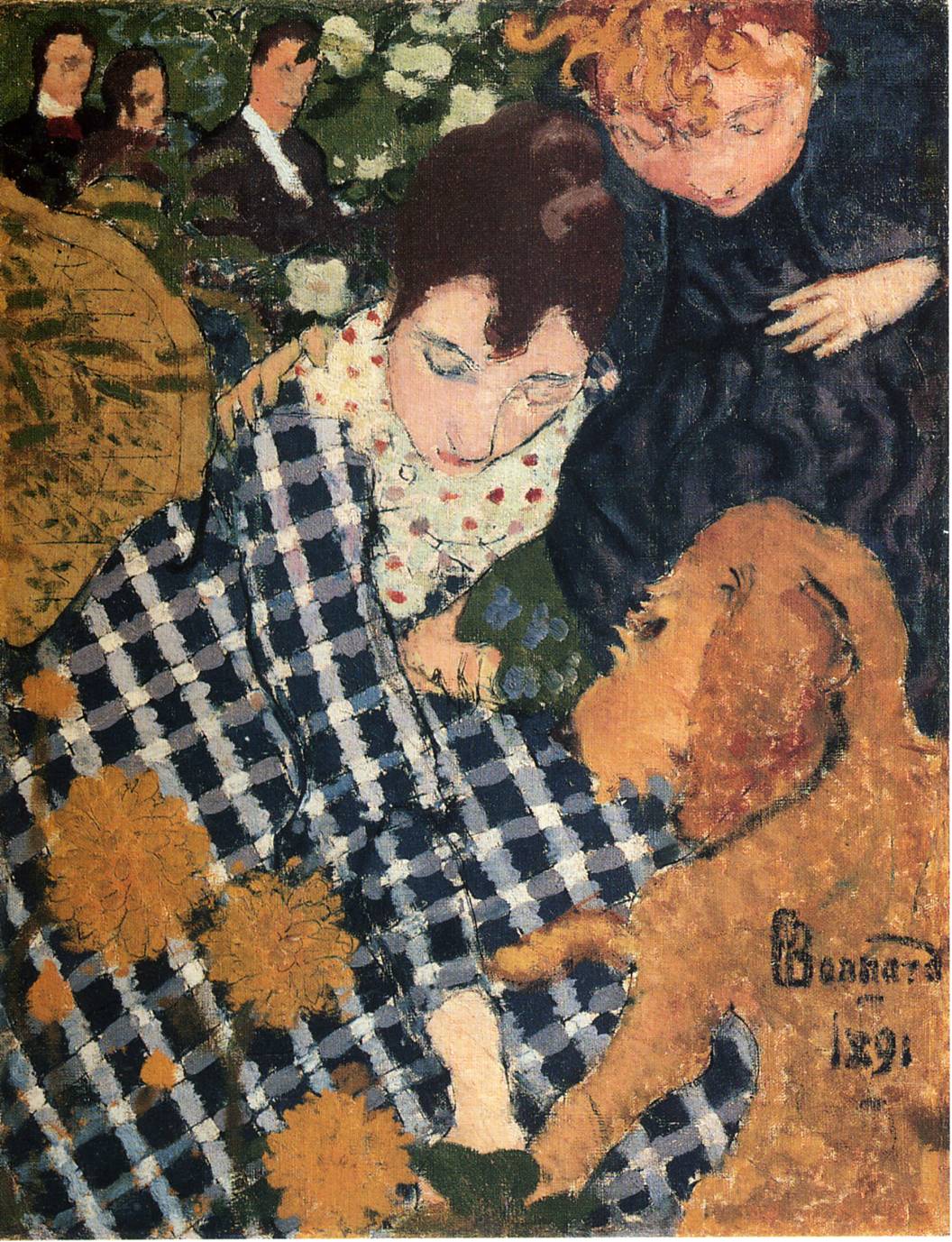
“Woman With a Dog,” on loan from the Sterling and Francine Clark Art Institute of Williamstown, Mass. Then the exhibition charts Bonnard’s complicated, ever-larger mature works, such as his intensely colored landscapes influenced by years spent near Cannes.
Nhận xét
Đăng nhận xét