National Gallery of Art Reunites Rubens' Portraits of the Three Magi for the First Time in More Than a Century
This spring three paintings of the Magi, or wise men, by the Flemish master Peter Paul Rubens (1577–1640) will be reunited at the National Gallery of Art, Washington, for the first time in more than 130 years. On view in the West Building of the Gallery from March 17 through July 5, 2015, Peter Paul Rubens: The Three Magi Reunited also explores the relationship between the artist and Balthasar Moretus the Elder (1574–1641), head of the prestigious Plantin Press, the largest publishing house in 16th- and 17th-century Europe.
Balthasar Moretus, a close childhood friend of Rubens, commissioned these paintings around 1618. Moretus and his two brothers were named after the Three Magi (Balthasar, Melchior, and Gaspar), thus these works had a special personal meaning for both the artist and his patron. Rubens executed these bust-length images with strong colors and vigorous brushstrokes that bring these biblical figures to life.
"At the time, the Adoration of the Magi was a common subject in art, but these intimate paintings take the kings out of their usual narrative setting," said Earl A. Powell III, director, National Gallery of Art. "Rubens conjured them as tangible flesh and blood believers."
About the Exhibition
The portraits of the old king (Gaspar), owned by the Museo de Arte de Ponce near San Juan, Puerto Rico, and the young king (Balthasar), from the Plantin-Moretus Museum in Antwerp, Belgium, were previously on view at the Museo de Arte de Ponce in Wise Men from East: The Magi Portraits by Rubens (November 3, 2014–March 9, 2015). The painting of the middle-aged king (Melchior) was given to the Gallery in 1943 as part of the Chester Dale Collection. As stipulated in the bequest, the work cannot travel or go on view in any other museum. Therefore, this exhibition marks a rare opportunity for visitors to see all three of Rubens' kings together again.
About the Magi
The Gospel of Matthew is the only gospel to mention the Magi, though it offers few details about them, not even their number. Biblical scholars speculated on their appearance and origins for years until eventually the Magi came to be regarded as three kings hailing from the three then-known continents: Europe, Asia, and Africa. They came to symbolize the three ages of man: youth, middle age, and old age. They were also given names: Balthasar, Melchior, and Gaspar.
For 16th- and 17th-century residents of Antwerp, a harbor town and international center of commerce that imported luxury goods shipped from afar, the story of the Magi and their gifts took on a particular resonance. It was not unusual for residents to bear the names of the kings, as was the case with Balthasar Moretus and his two older brothers, as well as a trio of their paternal uncles. Moretus took his affinity for the kings further, incorporating the star of the Magi into printer's marks for the Plantin Press and adopting the Latin phrase stella duce ("with the star as guide") as his motto. Rubens, a deeply pious Catholic, movingly portrayed these regal visitors, who played an essential role in the manifestation of Christ to the world, in an unusual up-close format suited for the private contemplation of his close friend.
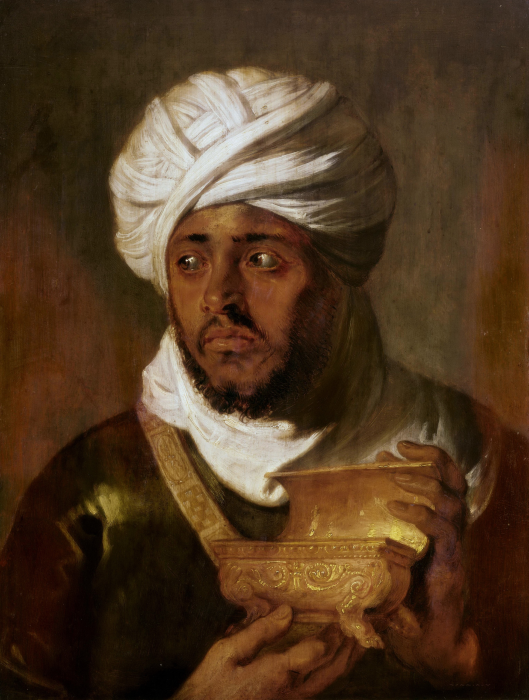
One of the Magi, possibly Balthasar (c. 1618, from the Plantin-Moretus Museum)
The African king is typically associated with the gift of myrrh, the aromatic resin used in embalming. Symbolically the presentation of this gift foreshadowed the death of Christ, a motif Rubens further exploited by encapsulating the myrrh in a small chest resembling a sarcophagus, from which a light emanates, alluding to the Resurrection. Rubens based the figure in this painting on his copy after a now-lost 16th-century portrait of a Tunisian king.

One of the Magi, possibly Melchior (c. 1618, from the National Gallery of Art)
The middle-aged king opens his vessel to reveal frankincense, an aromatic substance derived from the sap of Boswellia trees found in the Middle East, North Africa, and India. Biblical commentators interpreted the gift as representative of sacrifice, prayer, and the recognition of the Christ child's divinity.

One of the Magi, possibly Gaspar (c. 1618, from the Museo de Arte de Ponce)
In most Adoration of the Magi scenes, the eldest king kneels closest to the Christ child offering gold, the most precious of the three gifts. Traditionally, this was interpreted as symbolizing Jesus' kingship. The pensive, aged figure in Rubens' portrait wears no crown, but his eminence radiates in the resplendence of both his gold brocade mantle ringed by soft fur and his costly gold scalloped dish filled with coins—a tribute from one king to another.
"At the time, the Adoration of the Magi was a common subject in art, but these intimate paintings take the kings out of their usual narrative setting," said Earl A. Powell III, director, National Gallery of Art. "Rubens conjured them as tangible flesh and blood believers."
About the Exhibition
The portraits of the old king (Gaspar), owned by the Museo de Arte de Ponce near San Juan, Puerto Rico, and the young king (Balthasar), from the Plantin-Moretus Museum in Antwerp, Belgium, were previously on view at the Museo de Arte de Ponce in Wise Men from East: The Magi Portraits by Rubens (November 3, 2014–March 9, 2015). The painting of the middle-aged king (Melchior) was given to the Gallery in 1943 as part of the Chester Dale Collection. As stipulated in the bequest, the work cannot travel or go on view in any other museum. Therefore, this exhibition marks a rare opportunity for visitors to see all three of Rubens' kings together again.
About the Magi
The Gospel of Matthew is the only gospel to mention the Magi, though it offers few details about them, not even their number. Biblical scholars speculated on their appearance and origins for years until eventually the Magi came to be regarded as three kings hailing from the three then-known continents: Europe, Asia, and Africa. They came to symbolize the three ages of man: youth, middle age, and old age. They were also given names: Balthasar, Melchior, and Gaspar.
For 16th- and 17th-century residents of Antwerp, a harbor town and international center of commerce that imported luxury goods shipped from afar, the story of the Magi and their gifts took on a particular resonance. It was not unusual for residents to bear the names of the kings, as was the case with Balthasar Moretus and his two older brothers, as well as a trio of their paternal uncles. Moretus took his affinity for the kings further, incorporating the star of the Magi into printer's marks for the Plantin Press and adopting the Latin phrase stella duce ("with the star as guide") as his motto. Rubens, a deeply pious Catholic, movingly portrayed these regal visitors, who played an essential role in the manifestation of Christ to the world, in an unusual up-close format suited for the private contemplation of his close friend.
One of the Magi, possibly Balthasar (c. 1618, from the Plantin-Moretus Museum)
The African king is typically associated with the gift of myrrh, the aromatic resin used in embalming. Symbolically the presentation of this gift foreshadowed the death of Christ, a motif Rubens further exploited by encapsulating the myrrh in a small chest resembling a sarcophagus, from which a light emanates, alluding to the Resurrection. Rubens based the figure in this painting on his copy after a now-lost 16th-century portrait of a Tunisian king.
One of the Magi, possibly Melchior (c. 1618, from the National Gallery of Art)
The middle-aged king opens his vessel to reveal frankincense, an aromatic substance derived from the sap of Boswellia trees found in the Middle East, North Africa, and India. Biblical commentators interpreted the gift as representative of sacrifice, prayer, and the recognition of the Christ child's divinity.
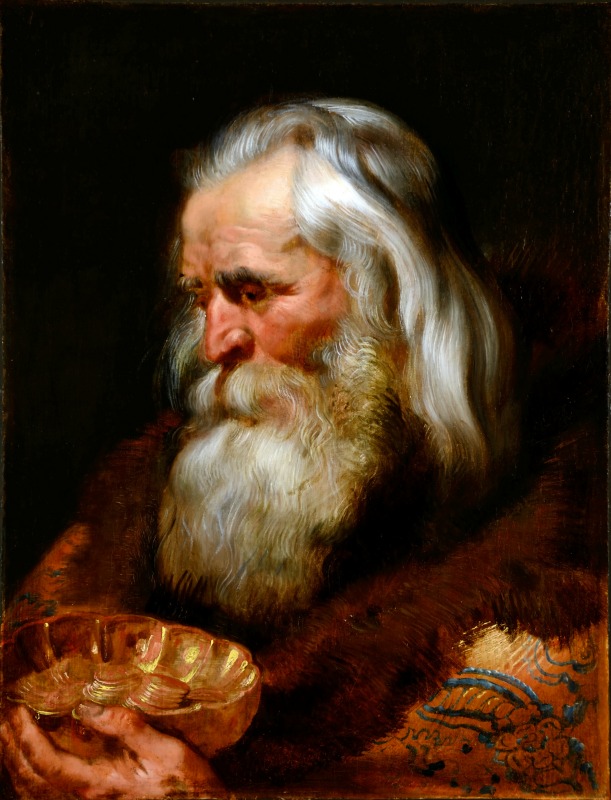
One of the Magi, possibly Gaspar (c. 1618, from the Museo de Arte de Ponce)
In most Adoration of the Magi scenes, the eldest king kneels closest to the Christ child offering gold, the most precious of the three gifts. Traditionally, this was interpreted as symbolizing Jesus' kingship. The pensive, aged figure in Rubens' portrait wears no crown, but his eminence radiates in the resplendence of both his gold brocade mantle ringed by soft fur and his costly gold scalloped dish filled with coins—a tribute from one king to another.
Nhận xét
Đăng nhận xét