Biography
Lyonel Feininger was born into a family of musicians in New York in 1871. Initially trained as a violinist, he went to Germany in 1887 to continue his musical education but soon switched to drawing. He studied art in Hamburg, Berlin, and Paris while supporting himself as a cartoonist and illustrator for German and American periodicals and newspapers. In Paris he met a number of avant-garde artists, and by 1912-1913 he had developed a personal version of cubism that showed the influence of futurism. Feininger's style is one in which forms are fragmented into faceted planes of color, creating a dialogue between abstraction and representation.Feininger exhibited with the Blue Rider (Blaue Reiter), a group of German expressionist artists including Wassily Kandinsky and Franz Marc. From 1918-1933 he taught at the Bauhaus, a German school famous for the study of modern architecture and design. After the closing of the Bauhaus in 1933 and the change of the political climate in Germany, Feininger returned to the United States. In 1938 he settled in New York, where the Museum of Modern Art presented the first extensive exhibition of his work in 1944. In America, Feininger continued to paint his favorite themes--buildings and cities, the sea and boats--in his distinctive style. Toward the end of his career, his style became more atmospheric and his colors more vibrant. Throughout the 1940s and 1950s Feininger's work was exhibited widely in the United States and in Europe.
Sotheby’s Impressionist and Modern Art in New York November 7 & 8, 2007.
Following the record price achieved for Lyonel Feininger at Sotheby’s last May when his
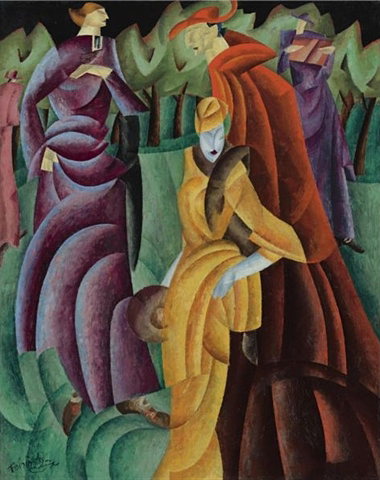
Jesuiten III
sold for a spectacular $23,280,000, Sotheby’s was thrilled to offer the artist’s

Der GrüneBrucke (The Green Bridge) LOT SOLD. 10,121,000 USD
Feininger made his debut into the world of avant-garde painting in Paris with the present work. The artist chose to include this impressive canvas at the annual Salon des Indépendants in the spring of 1911, where it would be hung alongside works by Matisse, Delaunay and Kandinsky. The occasion was also the premiere of the revolutionary Cubist compositions of Picasso and Braque, and their work would have a profound impact on Feininger’s later pictures.
Sotheby's February 2011

Lyonel Feiniger (1871 - 1956), Raddampfer am Landungssteg. Estimate £1,000,000-£1,200,000. Photo: Sotheby's
This splendid painting has not been seen in public for over 30 years. The painting’s first recorded owner was the famed banker, politician and art collector Hugo Simon. It has been part of the collection assembled by Fritz Katz of New York since 1972 and is in wonderfully fresh condition.
Painted in 1912, at the height of Feininger’s involvement with Die Brücke, Raddampfer am Landungssteg shows the artist redefining his style, referencing the aesthetic of French Cubism, but at the same time applying these ideas to grander subjects and attempting to synthesise rhythms, forms, perspectives and colours in a way that was uniquely his own. “My ‘cubism’, to so miscall it, for it is the reverse of the French cubists’ aims..., [is], if it must have a name, ‘prism-ism’ “.
Sotheby's 2015


Painted in 1912, at the height of Feininger’s involvement with Die Brücke, Raddampfer am Landungssteg shows the artist redefining his style, referencing the aesthetic of French Cubism, but at the same time applying these ideas to grander subjects and attempting to synthesise rhythms, forms, perspectives and colours in a way that was uniquely his own. “My ‘cubism’, to so miscall it, for it is the reverse of the French cubists’ aims..., [is], if it must have a name, ‘prism-ism’ “.
Sotheby's 2015

Lyonel Feininger
Lot. Vendu 35,000 GBP
Lyonel Feininger
Lot. Vendu 72,500 GBP 
Lyonel Feininger
Lot. Vendu 10,250 GBP Sotheby's 2014

Lyonel Feininger
LOT SOLD. 3,189,000 USD
Lyonel Feininger
Estimate 4,000,000 — 6,000,000 USD


Lyonel Feininger
Los Verkauft 75,000 USD
Lyonel Feininger
LOT SOLD. 209,000 USD 
Christie's 2015


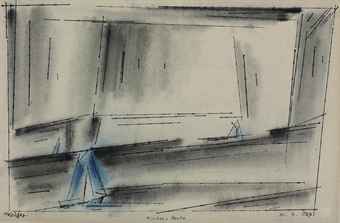
Christie's 2011

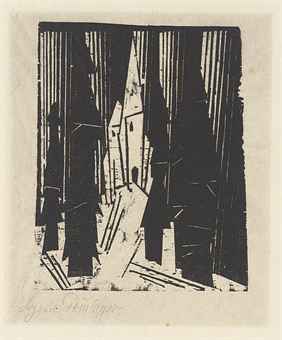
Christie's 2010

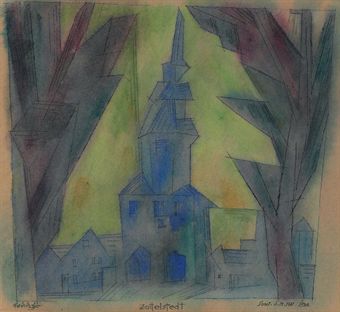
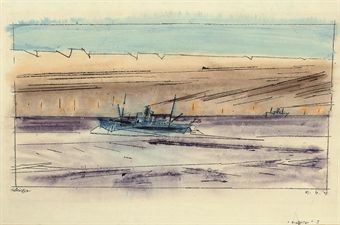
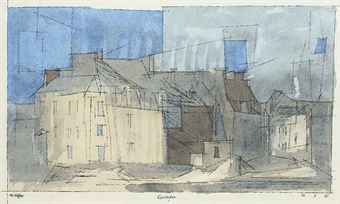
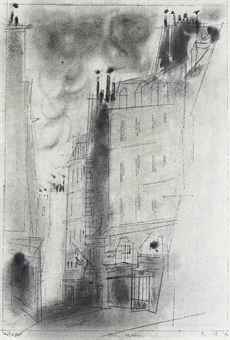
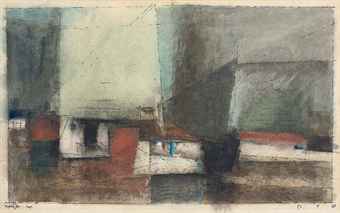
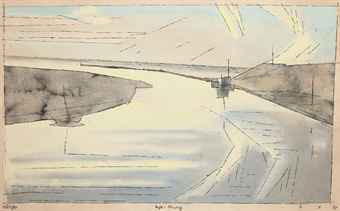
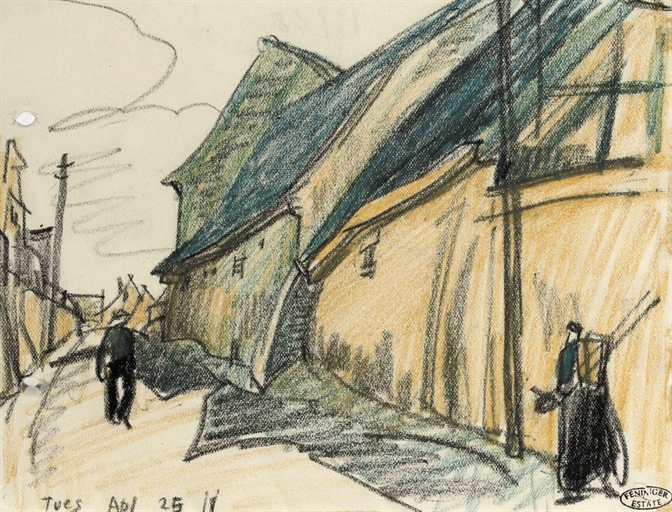
Christie's 2007
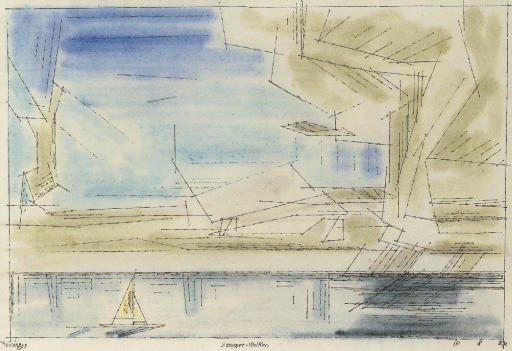
Christie's 2004

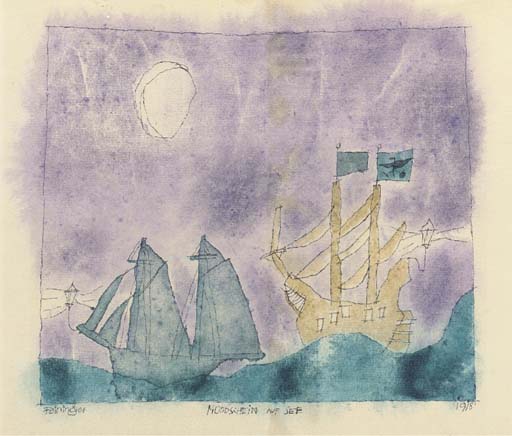
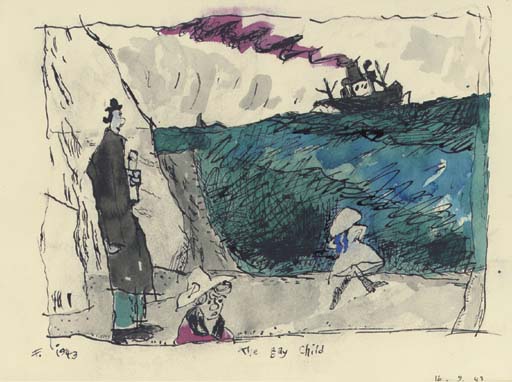
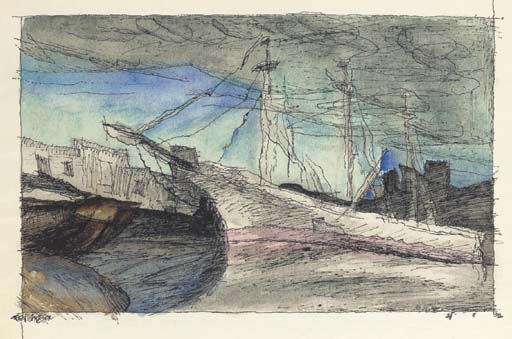
National Gallery od Art (Washington, DC)

- Feininger, Lyonel
- , American, 1871 - 1956
- The Bicycle Race
- 1912
- oil on canvas
- overall: 80.3 x 100.3 cm (31 5/8 x 39 1/2 in.)
- framed: 105.4 x 125.4 x 6 cm (41 1/2 x 49 3/8 x 2 3/8 in.)
- Collection of Mr. and Mrs. Paul Mellon
- 1985.64.17
-

-
- Feininger, Lyonel (painter)
- , American, 1871 - 1956
- Street of Barns
- 1914
- oil on canvas
- overall: 121.9 x 99.1 cm (48 x 39 in.)
- Gift (Partial and Promised) of the Arnold Saltzman Family
- 2001.129.1
- Feininger, Lyonel
- , American, 1871 - 1956
- Zirchow VII
- 1918
- oil on canvas
- overall: 80.7 x 100.6 cm (31 3/4 x 39 5/8 in.)
- framed: 92.1 x 111.4 x 7 cm (36 1/4 x 43 7/8 x 2 3/4 in.)
- Gift of Julia Feininger
- 1966.3.1
- Feininger, Lyonel
- , American, 1871 - 1956
- Storm Brewing
- 1939
- oil on canvas
- overall: 48.2 x 77.5 cm (19 x 30 1/2 in.)
- Gift of Julia Feininger
- 1967.12.1
- Feininger, Lyonel
- , American, 1871 - 1956
- The Gate
- 1912
- etching and drypoint
- plate: 19.9 x 27 cm (7 13/16 x 10 5/8 in.)
- sheet: 42 x 32.2 cm (16 9/16 x 12 11/16 in.)
- Gift of Joan A. Lees
- 2002.108.1
National Galleries of Scotland:
Lyonel Feininger (American / German, 1871 - 1956)
Feininger was born in New York to a German-American family. He moved to Germany in 1887, with the intention of studying music, but instead studied art in Hamburg, Berlin and Paris until 1893. At the turn of the century, Feininger was one of Germany's leading comic cartoonists and went on to produce some of America's most famous comic strips. In 1911 he visited Paris and saw cubist paintings for the first time. Thereafter, in his own paintings he began to use a distinctive grid-like structure and specialized in painting churches and seascapes full of a romantic spirituality. Feininger taught at the Bauhaus from 1919 to 1925 and was in charge of the printing workshops. He returned to New York in 1937.
- Gelmeroda III 1913

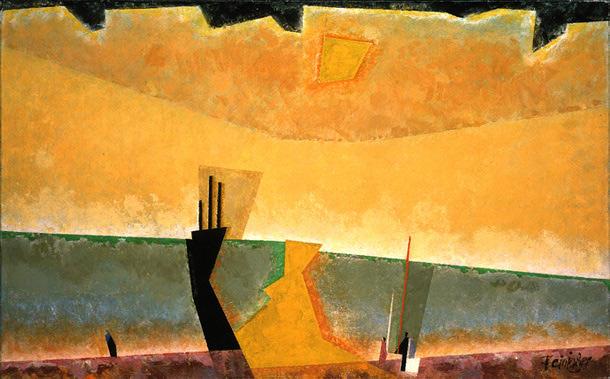

Feininger first drew the church at Gelmeroda, a small village near Weimar, in 1906. It became a recurrent motif in his work, featuring in numerous drawings and prints and in thirteen oil paintings ranging in date from 1913 to 1936. Although the church carried a symbolic meaning in Feininger's work, its architectural form also provided the ideal motif for the artist's interest in geometric compositions. This is the third of three Gelmeroda paintings, also dating from 1913. It is a more balanced composition than the first two paintings, which feature a leaning spire cut by sharp Cubist planes.

Yachts, 1950
Lyonel FeiningerAmerican, 1871 - 1956
oil on canvas
53.3 x 91.8 cm
Gift of Dorothy Meigs Eidlitz, St. Andrews, New Brunswick, 1968
National Gallery of Canada (no. 15719)
© The Lyonel Feininger Family LLC / SODRAC (2013)
Born in the United States, Lyonel Feininger moved to Germany in 1887 to pursue a career in music. Instead, he concentrated on art, supporting himself as a cartoonist while studying in Berlin and Paris. Feininger's contact with the Cubists, Robert Delaunay, and the Blaue Reiter group had a profound effect on his art. He developed a distinctive style characterized by a geometric angularity that melds abstraction and representation. As a founding member of the Bauhaus School of Art in 1919, he taught drawing and painting and supervised the graphic workshop and printing press until the school was closed in 1933. In 1937, the political climate in Germany prompted him to return to the United States. There he taught art and continued painting, focusing on favourite themes such as the sea and ships.
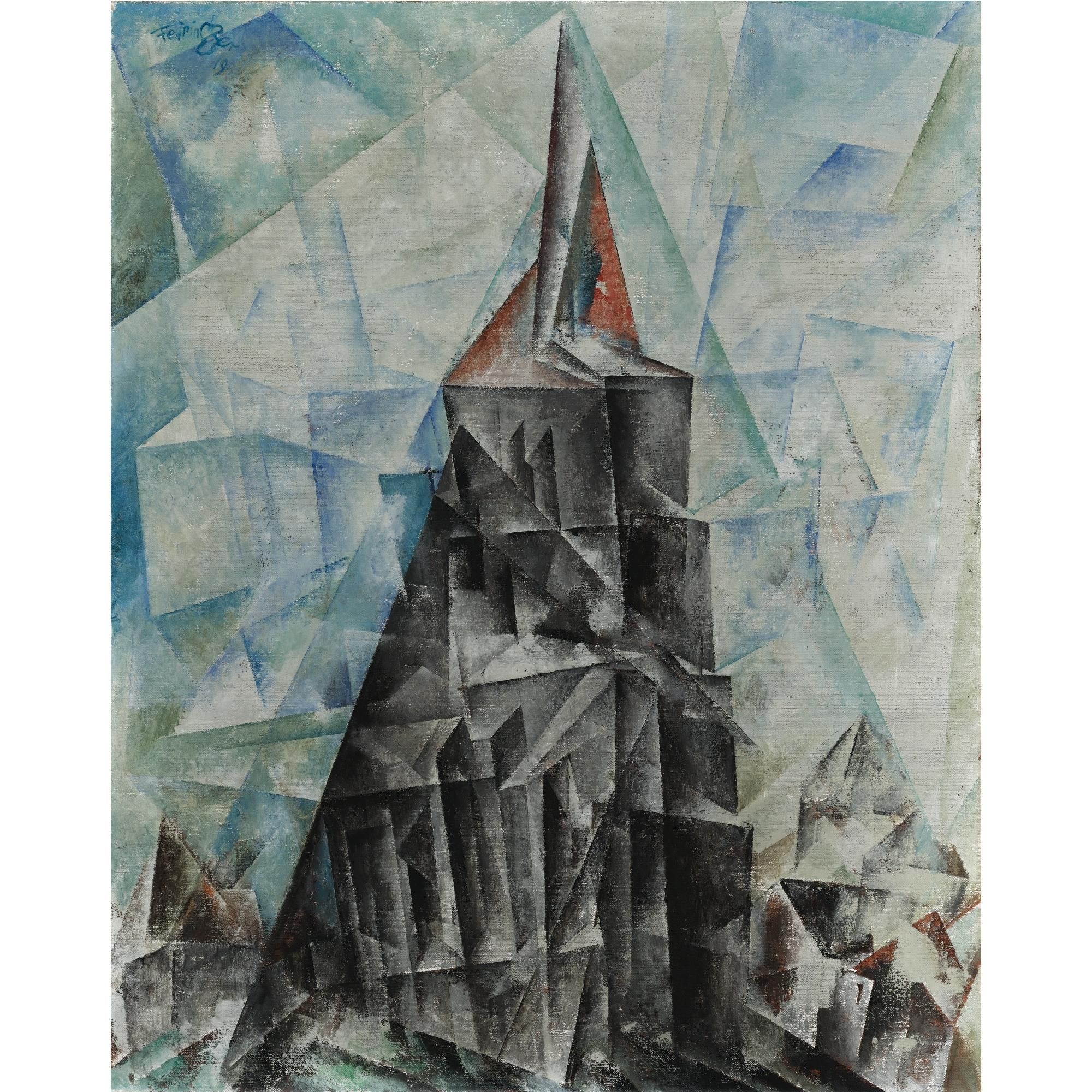
In May, the Gallery purchased a large abstract work, Umpferstedt III by the American artist Lyonel Feininger (1871-1956), at Sotheby's, in New York (7 May, $1,700,000). Executed during a pivotal time in Feininger's career when he joined the Bauhaus (1919), the painting is one of three works produced in Umpferstedt, in the Weimar region of Germany. The painting is an important addition to the Gallery's early modern collection and will complement its holdings of German Expressionist works by Nolde and Pechstein, and the Cubist works of Picasso and Gris.
Nhận xét
Đăng nhận xét