Sotheby's February 2016

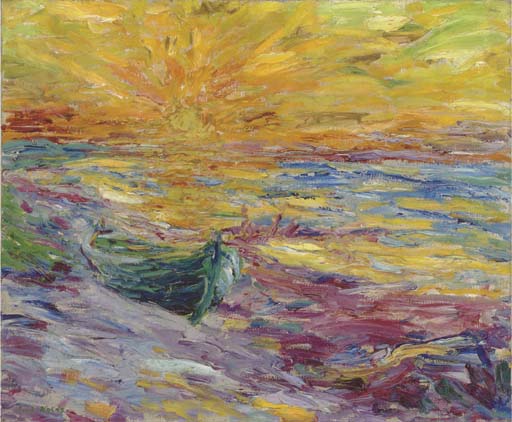
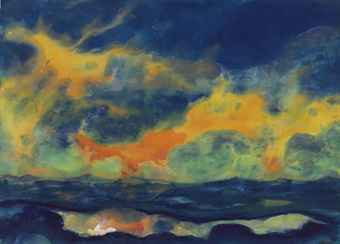
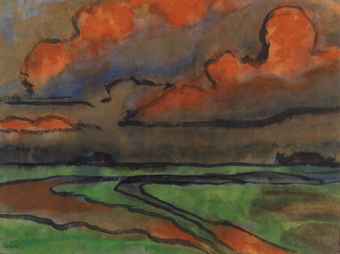
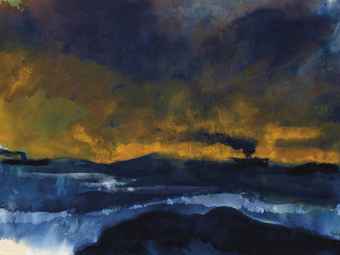
Emil Nolde Meer Bei Alsen (Sea off Alsen) (1910) Estimate: £1,200,000-1,600,000
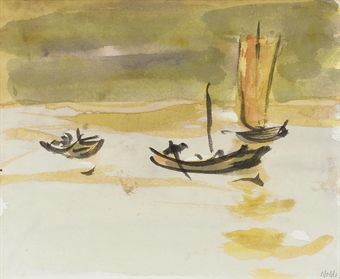
Painted in 1910, Meer bei Alsen is one of the earliest representations of the sea by Emil Nolde, and is an exceptionally powerful and dynamic example of a subject which captivated him throughout his career. Preoccupied with the task of representing the sky and sea as elemental forces, the artist’s instinctive response to one of nature's most moving spectacles is clear in the raw energy capture by the rapid brushwork.
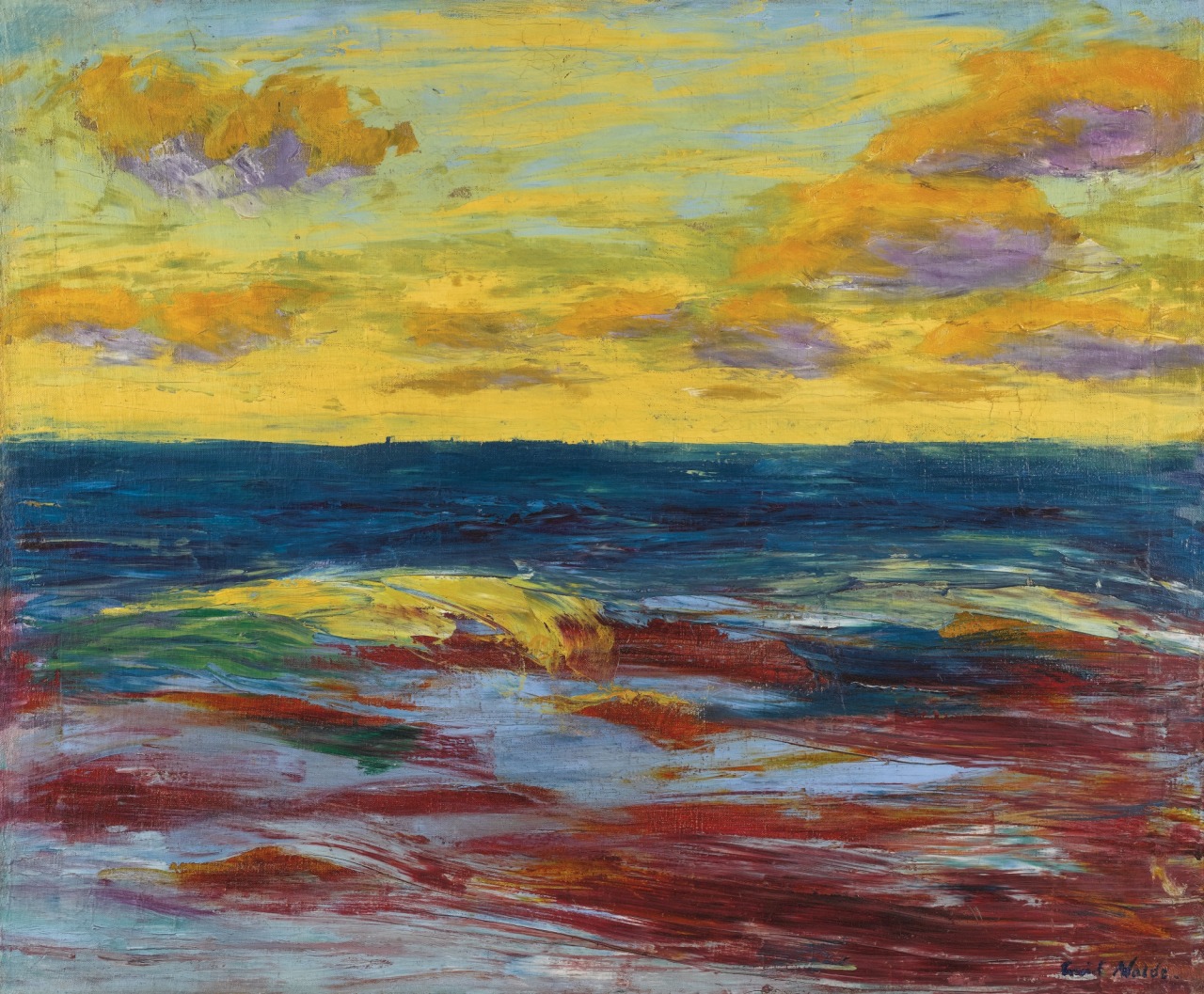
Emil Nolde Meer Bei Alsen (Sea off Alsen) (1910) Estimate: £1,200,000-1,600,000
Painted in 1910, Meer bei Alsen is one of the earliest representations of the sea by Emil Nolde, and is an exceptionally powerful and dynamic example of a subject which captivated him throughout his career. Preoccupied with the task of representing the sky and sea as elemental forces, the artist’s instinctive response to one of nature's most moving spectacles is clear in the raw energy capture by the rapid brushwork.
Sotheby's February 2011
The sale featured two works by Emil Nolde (1867-1956), both of which came to auction directly from the artist’s family. The first,

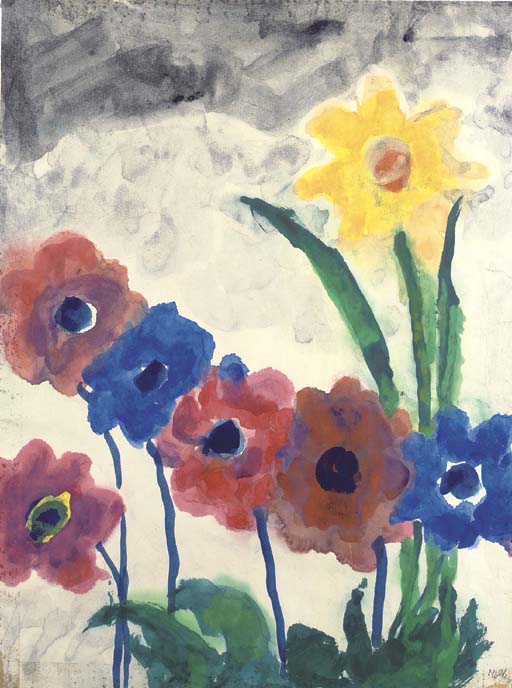
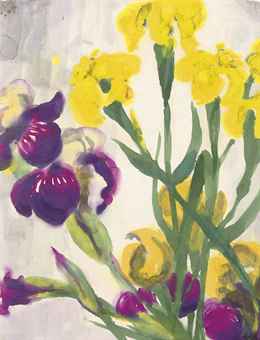
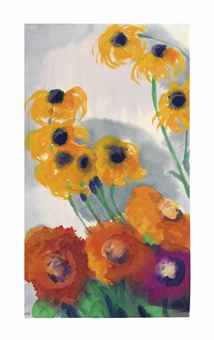
Zinnen und Stockrose (Zinnias and Hollyhocks, 1938, est: £900,000-£1,400,000)
is a powerful example of Nolde’s great series of flower paintings. His intensive preoccupation with the subject has been seen as a reflection of his continuing interest in the work of Van Gogh, whose bright colours, bold brushstrokes and magnificent textures are echoed here, while at the same time evincing Nolde’s own emotional admiration for the beauty of nature. Within the gamut of nature, another subject that preoccupied Nolde throughout his career was that of the sea.

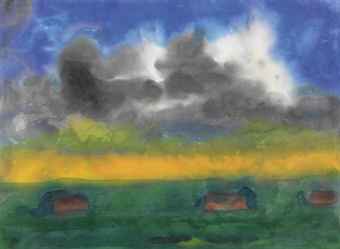
Űberschleierte Sonne (Veiled Sun, 1950, est: £500,000-700,000) is a powerful example of the artist’s breathtaking seascapes.

Zinnen und Stockrose (Zinnias and Hollyhocks, 1938, est: £900,000-£1,400,000)
is a powerful example of Nolde’s great series of flower paintings. His intensive preoccupation with the subject has been seen as a reflection of his continuing interest in the work of Van Gogh, whose bright colours, bold brushstrokes and magnificent textures are echoed here, while at the same time evincing Nolde’s own emotional admiration for the beauty of nature. Within the gamut of nature, another subject that preoccupied Nolde throughout his career was that of the sea.
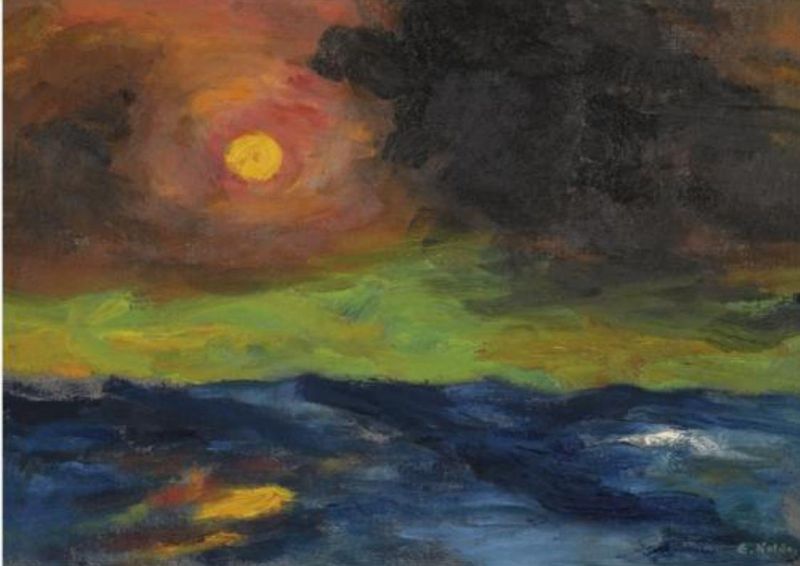
Űberschleierte Sonne (Veiled Sun, 1950, est: £500,000-700,000) is a powerful example of the artist’s breathtaking seascapes.
SOTHEBYS’ SALE of German & Austrian Art February 5, 2007
Two powerful works by Emil Nolde (1867-1956) demonstrate the artist’s obsessive fascination with the natural world.

His Meer C (Sea C) of 1930 (est: £700,000-900,000/€1,040,000-1,340,000) is part of a series of sea paintings which Nolde executed in the course of his career and in which he explores the overwhelming power of natural forces.


His Meer C (Sea C) of 1930 (est: £700,000-900,000/€1,040,000-1,340,000) is part of a series of sea paintings which Nolde executed in the course of his career and in which he explores the overwhelming power of natural forces.
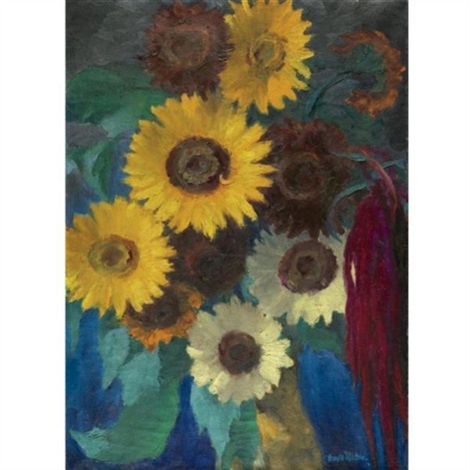
In another work,Helle und dunkle Sonnenblumen of 1937 ( est: £700,000-1,000,000/€1,040,000-1,490,000),
Nolde explores a related theme, capturing both the vitality of the sunflower blooms and the resonance of their short-lived beauty. Charged with atmosphere and symbolism, this vivid representation of the blooming and dying flowers is an outstanding example from the artist’s series of depictions of sunflowers – a subject to which he returned constantly for some 20 years from 1926 onwards, and through which he pays homage to an artist who was for him a constant source of fascination: Vincent van Gogh.
Nolde explores a related theme, capturing both the vitality of the sunflower blooms and the resonance of their short-lived beauty. Charged with atmosphere and symbolism, this vivid representation of the blooming and dying flowers is an outstanding example from the artist’s series of depictions of sunflowers – a subject to which he returned constantly for some 20 years from 1926 onwards, and through which he pays homage to an artist who was for him a constant source of fascination: Vincent van Gogh.
SOTHEBY'S Impressionist and Modern Art February 4, 2003
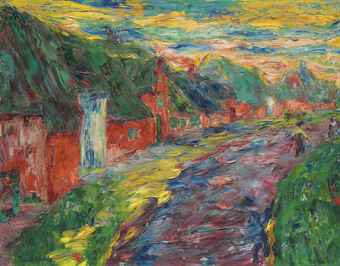
Works in this sale by Emil Nolde included the explosively colorful

Forsthaus of 1909 (est: £800,000-1,200,000)

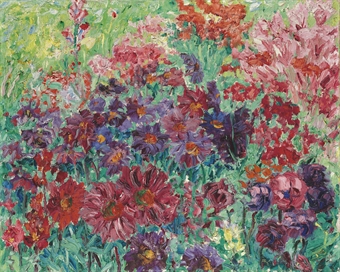
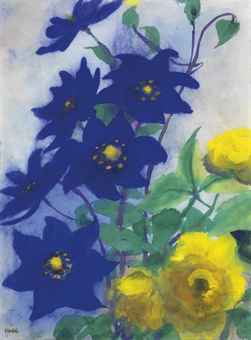
and the vividly decorative Clematis und Dahlien of 1935 (est: £450,000-600,000).
What unifies the paintings is their quest for expression through simplification of form and distortion of line and colour.
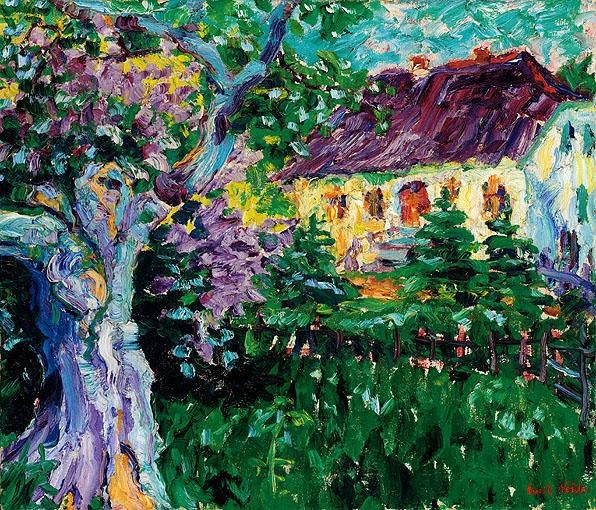
Forsthaus of 1909 (est: £800,000-1,200,000)

and the vividly decorative Clematis und Dahlien of 1935 (est: £450,000-600,000).
What unifies the paintings is their quest for expression through simplification of form and distortion of line and colour.
Christie's 2009
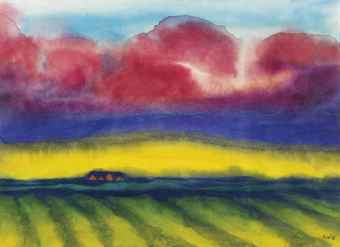
Pr.$84,100
Christie's 2010


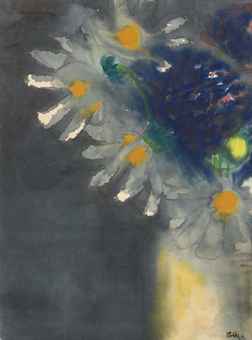
Pr.£1,609,250($2,610,204)

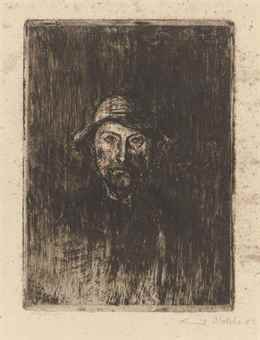
Pr.£49,250($77,175)
Pr.£1,609,250($2,610,204)
Christie's 2012

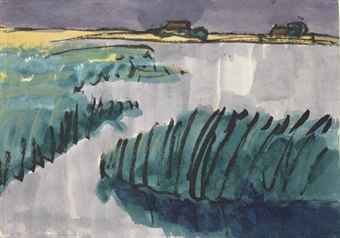
Pr.£43,250($67,773)
Sotheby's 2014


Christie's 2010
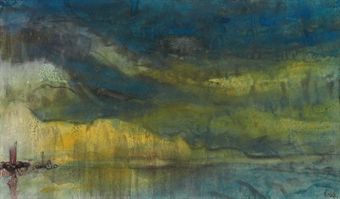
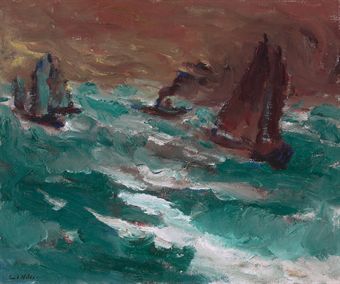
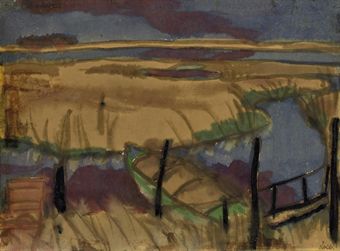
Pr.£49,250($77,175)
Pr.£1,609,250($2,610,204)
Christie's 2012
Pr.£43,250($67,773)

Sotheby's 2014

Emil Nolde
LOT SOLD. 112,500 USD
Emil Nolde
Estimate  35,000 — 45,000 GBP
Christie's 2014

Pr.£104,500($177,232)
Christie's 2015

Pr.£1,426,500($2,161,148)
35,000 — 45,000 GBPChristie's 2014
Pr.£104,500($177,232)
Christie's 2015
Pr.£1,426,500($2,161,148)
National Gallery of Denmark:
The Last Supper is an artistic milestone within Emil Nolde’s body of work. The work marks the beginning of a series of very personal pictures where Nolde broke away from traditional religious imagery. Using expressive colours and shapes, he communicates subjective and intense religious sentiments with new, shocking coarseness.
The motif of the painting
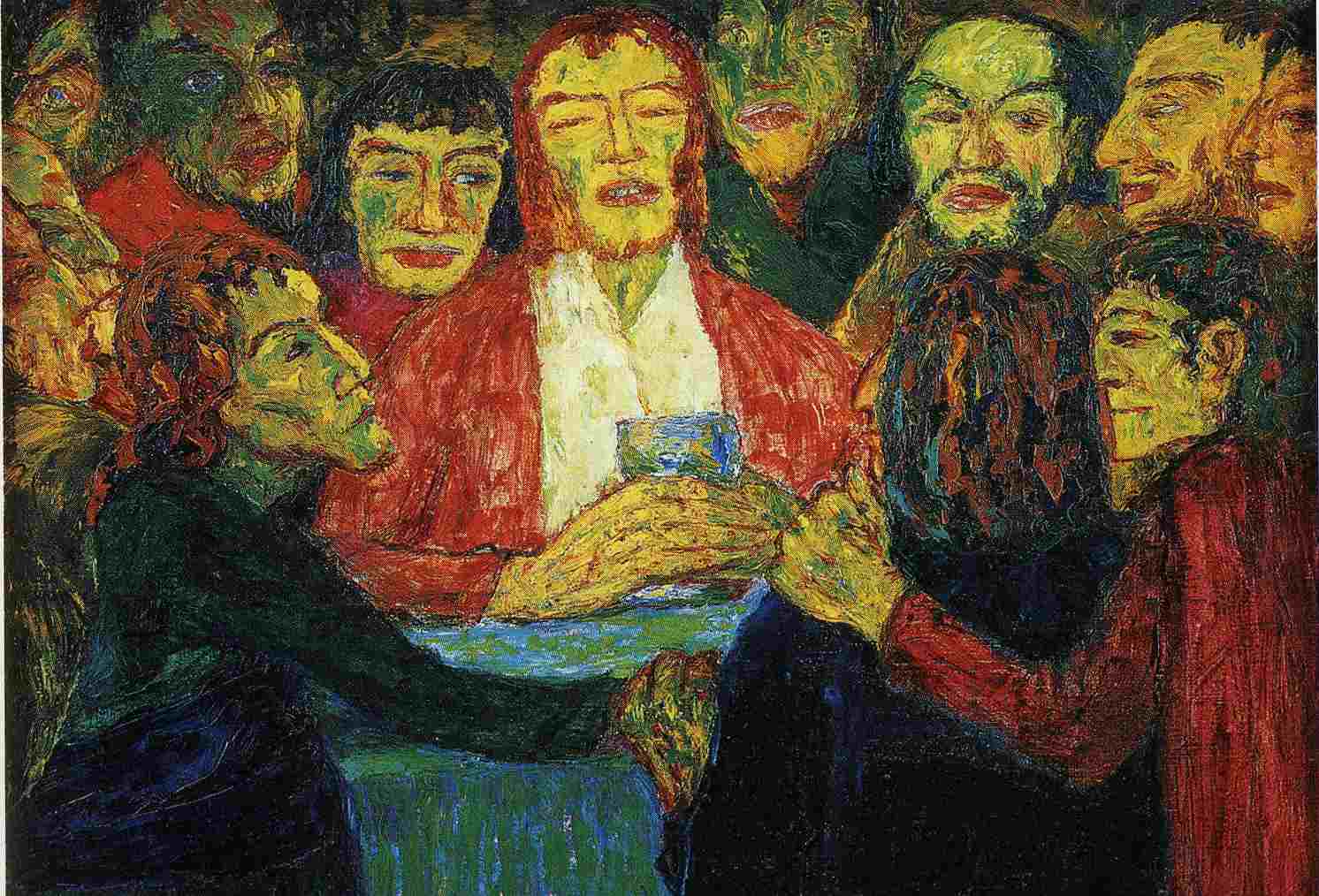
Christ and the twelve disciples are seated around a table. The thirteen men are gathered around a source of light that creates drama by accentuating their grave and startled expressions. There is no depth in the painting, no details to describe the space in which the action takes place. The expressive colours and the restricted space serve to deepen the psychological aspects of the scene. Christ is seated in the middle and looks like a man close to death; the yellow face prefigures the fate of the Son of Man. Shortly before Nolde began work on The Last Supper, he almost died from poisoning. Thus, one might argue that Nolde identifies with Christ.
Nazism, Nolde and the Entartete Kunst
The Nazis took offence at The Last Supper, removed it from the museum in Halle and gave it a prominent place at the Entartete Kunst exhibition in 1937. Nolde eventually got back the picture and bequeathed it to the National Gallery of Denmark in his will.
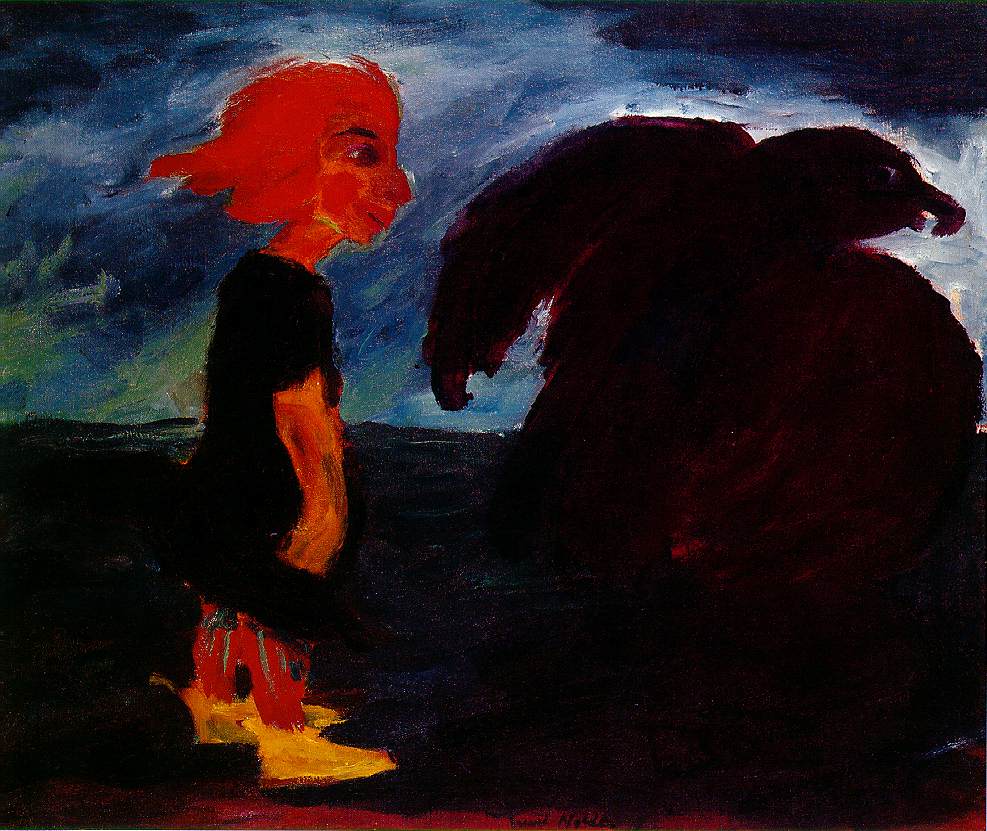
Emil Nolde’s works from around 1912 often feature grotesque juxtapositions. Child and Large Bird is one example of such works with its surrealist proportions and absurd combination of figures. The bird is frighteningly large compared to the child. Nevertheless, its superior size does not prevent it from being scared away by the little girl’s peculiar physique. The girl’s head is too large in proportion to the thin neck and the tiny body. Her nose is too broad, her forehead too low, and her mouth too wide. The grotesque relationship between the child and the bird is further accentuated by Nolde’s use of an expressive colour scheme. The colours are bright and fervent, full of discord.National Galleries of Scotland:
The grim aspect of the painting
Things were looking grim in Germany in 1912. The country was on the brink of the Great War. The child can be interpreted as life chasing away darkness, death, and war as embodied by the eagle, a symbol of Germany. Nolde addressed the same motif in a number of woodcuts from 1906. Those images were less eerie, as the relative dimensions of the bird and the girl were less distorted and the colour scheme was black and white.
Nolde is one of the key figures within German Expressionism. His art is powerful and deeply felt, partly inspired by the dark and sombre visions of the German Symbolist painter Arnold Böcklin (1827-1901).

Emil Nolde (German, 1867 - 1956) Kopf [Head] 1913
Emil Hansen was born in Nolde, a town which is now on the Danish side of the Danish-German border. He changed his surname to Nolde when he was in his late thirties. Nolde's style was highly influential for younger expressionist painters such as Kirchner. He loved the art of primitive peoples but was also interested in creating a style of painting that was specifically German. From 1906 to 1908, he was a member of the Brücke group of expressionist artists, but he preferred on the whole not to be associated with a group.
National Gallery of Ireland :
Nolde's interest in the art of primitive peoples is evident in this painting. The shape of the head and facial features resemble a tribal wooden carving. The artist was a frequent visitor to the Ethnographic Museum in Berlin, and also made a trip to New Guinea where he spent a year. It was originally thought that this picture was painted during his trip. However it is more likely that it was done before his departure, in preparation for the type of painting he expected to make on the trip.

Emil Nolde, German, 1867-1956Two Women in a Garden, 1915Oil on canvas73 x 88 cmSigned: on verso (on stretcher): Emil Nolde 'Frauen im Garten'Purchased, 1984 (Shaw Fund)NGI.4490
Emil Nolde was one of the principal exponents of Expressionism. The Expressionists deliberately sought to abandon the naturalism implicit in Impressionism in favour of a simplified style which would carry far greater emotional impact.
In 1913, in order to study the 'primitive' art he had admired in the Berlin Ethnographic Museum at first hand , Nolde accompanied a scientific expedition that travelled through Russia to Japan and the South Seas. Although it was brought to an end by the outbreak of World War I, the voyage marked a turning point in the artist's career. It coincided with the end of first generation Expressionism and marked Nolde's return to painting gardens and flowers rather than urban subjects.
Nolde spent most of 1915 in his small cottage on the island of Alsen. He produced some 88 works that year, many of which drew upon the sketches he had made during his voyage. 'Two Women in a Garden' was painted in his garden using large brush strokes.
Nhận xét
Đăng nhận xét