In March 2015 the Royal Academy of Arts will presenta survey of Richard Diebenkorn’s figurative and abstract works to a UK audience for the first time in almost twenty-five years. Celebrated as a post-war Master in his native United States, the exhibition will serve as an opportunity to discover the importance of Diebenkorn (1922-1993) within the canon of American painting.
Richard Diebenkorn will be a focused exploration of the artist’s ever-changing, always compelling career across four decades, shifting from the abstract to the figurative in both painting and works on paper. The exhibition will comprise over 50 works with significant loans from public and private collections in the United States and Europe. Diebenkorn created an exceptional and consistently intriguing body of work.
The exhibition will reveal the vital role heplayed in the development of American art, and will be arranged to reflect the three distinct periods of his work. During the early stage of his career in the 1950s he gained recognition as a leading abstract expressionist yet in 1955 he turned his attention to figurative painting, considered at the time as a surprising and unfashionable shift, although he achieved considerable success working in this genre.
In 1967, having relocated to Southern California from the San Fancisco Bay Area, he returnedto abstract paintings and drawings beginning a second long and highly successful period in this style. The exhibition will highlight his staunch artistic independence and will show the ease of movement between styles,which were hallmarks of his career.
The first gallery will explore Diebenkorn’s early abstract work, produced for his Museum of Fine Arts exhibition in Albuquerque, New Mexico and during a teaching post that followed in Urbana, Illionois between 1950 and 1952, as well as the earliest abstract works he produced in Berkeley, California.
The second gallery will focus on works made during his return to figurative and landscape studies in Berkeley, California between 1955 and 1966, when he became known as a successful Bay Area Figurative artist.
The last gallery will display his largest and perhaps most famous body of work, the non-objective Ocean Park series created between 1967 and 1988 in Southern California.
Diebenkorn was strongly associated with California and the American West, where he lived and worked for most of his life. The quintessential colourist, his sumptuous palette and compositions reveal an exquisite sensitivity to his environment and geography, capturing a sense of the light and space of the various locations in which he worked.
For Diebenkorn, each work was a search for ‘rightness’, an attempt to solve complex and often self-imposed compositional and spatial problems, so that each work becomes a perfectly balanced resolution.
Despite his deserved recognition in the United States, Diebenkorn’s work has been less widely exhibited in Europe. The only major solo exhibition was at the Whitechapel Gallery in 1991 and he was elected an Honorary Academician in 1992, shortly before his death in 1993,a testament to the level of esteem in which he was held by fellow artists.
Richard Diebenkorn will demonstrate the variety and subtlety of the artist’s oeuvre and the ease of his transition from abstraction to figuration and back again, reinvigorating hisposition as a modern American Master.
Organisation
Richard Diebenkorn has been organised by the Royal Academy of Arts, London. It will be guest curated by Sarah C. Bancroft, curator of the exhibition Richard Diebenkorn: The Ocean Park Series (Modern Art Museum of Fort Worth, Orange County Museum of Art, and Corcoran Gallery of Art, 2011-12), with Edith Devaney, Exhibition Curator at the Royal Academy. T
he exhibition has the full co-operation of the Richard Diebenkorn family and estate (including the artist’s widow Phyllis Diebenkorn), and the Richard Diebenkorn Foundation.
Catalogue
The exhibition will be accompanied by a fully illustrated catalogue with contributions from Sarah C. Bancroft, Edith Devaney and Steven Nash.
Images:
All works by Richard Diebenkorn. © 2014 The Richard Diebenkorn Foundation

Berkeley #5
, 1953. Oil on canvas, 134.6 x 134.6 cm. Private collection.

Albuquerque #4
, 1951. Oil on canvas, 128.9 x 116.2 cm. Saint Louis Art Museum. Gift of Joseph Pulitzer Jr.


Ocean Park #116
, 1979. Oil and charcoal on canvas, 208.3 x 182.9 cm. Fine Arts Museums of San Francisco, museum purchase, gift of Mrs. Paul L. Wattis

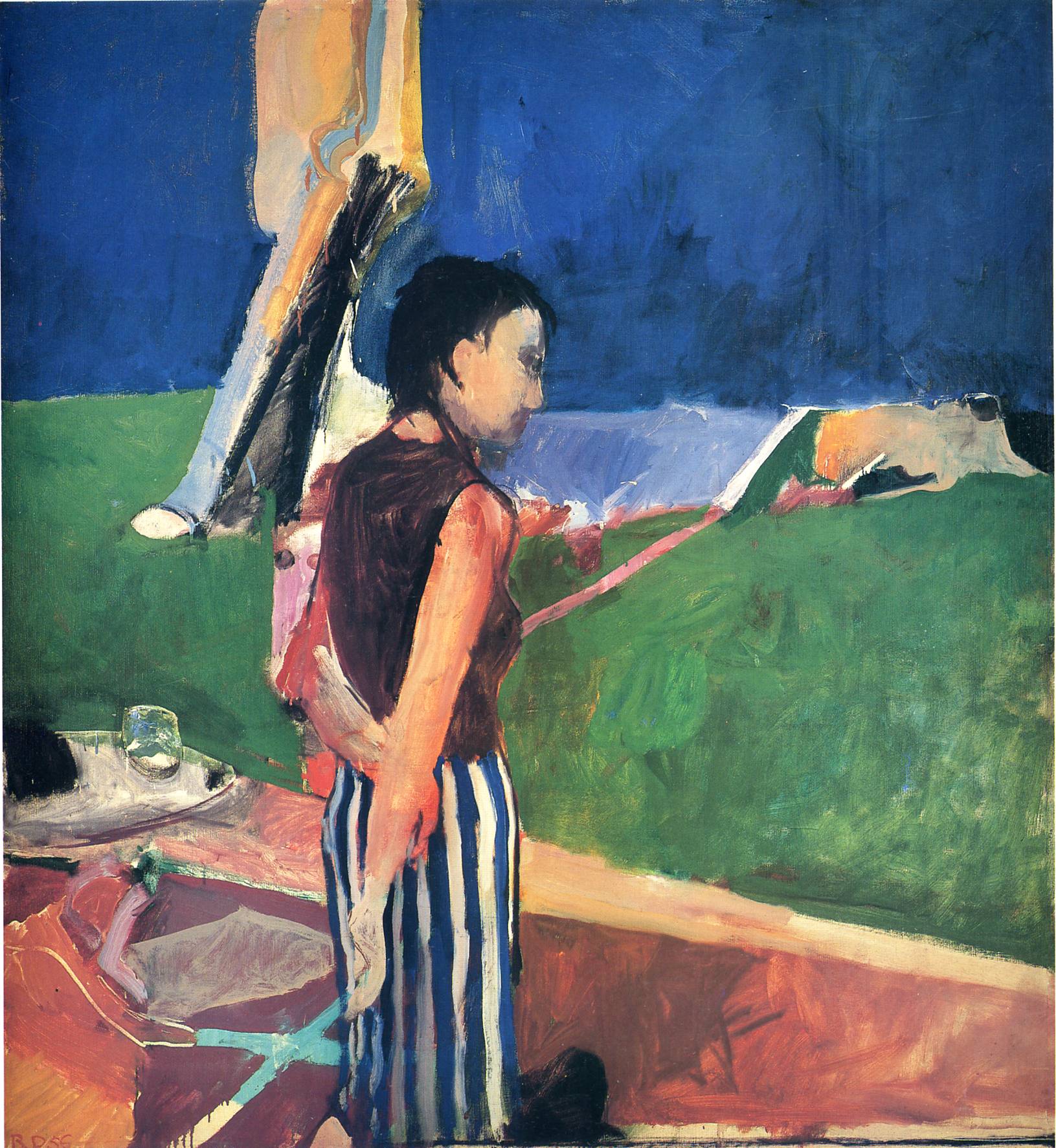
Girl On a Terrace
, 1956. Oil on canvas, 179.07 x 166.05 x 2.54 cm. Collection Neuberger Museum of Art. Purchase College, State University of New York. Gift of Roy R. Neuberger

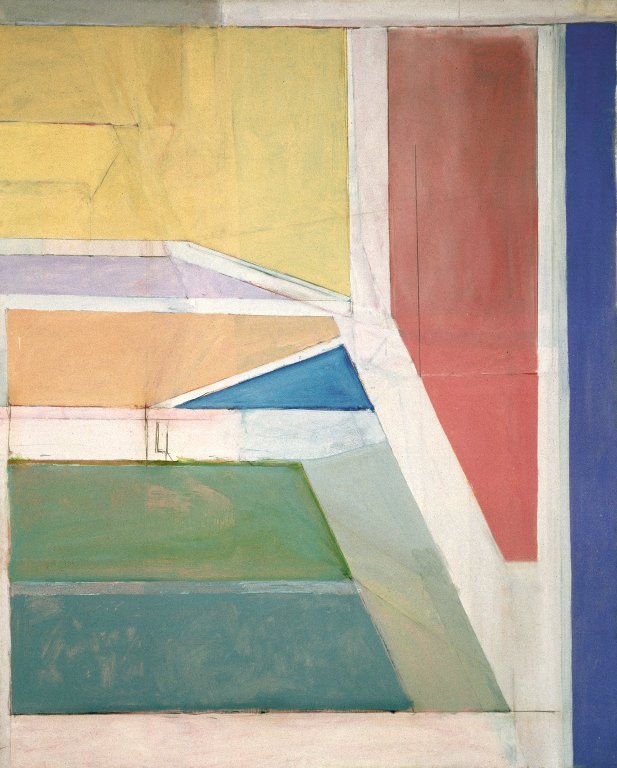
Ocean Park #27
, 1970. Oil on canvas, 254 x 203.2 cm. Brooklyn Museum. Gift of The Roebling Society and Mr. and Mrs. Charles H. Blatt and Mr. and Mrs. William K. Jacobs, Jr., 72.4

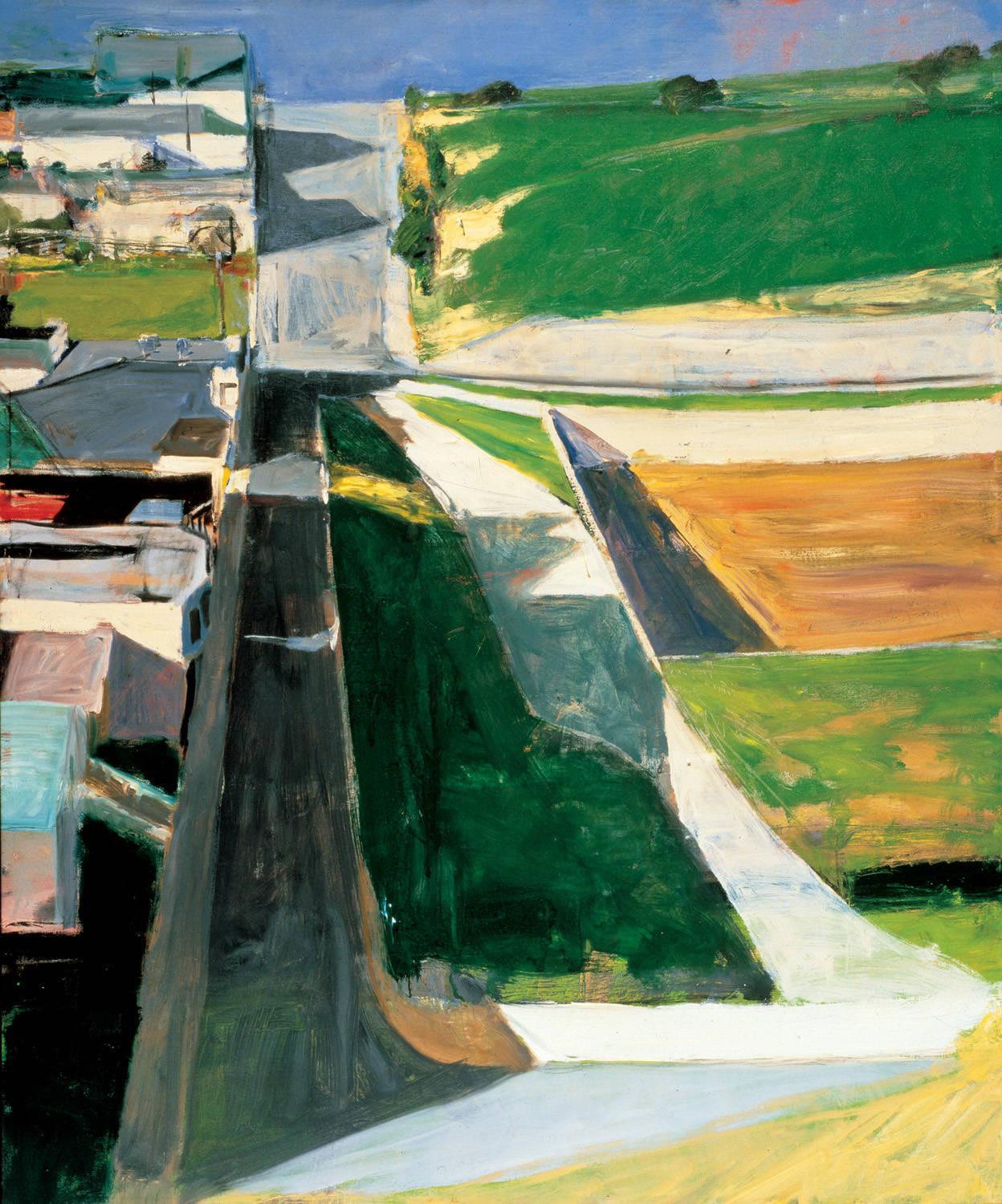
Cityscape #1
, 1963. Oil on canvas, 153 x 128.3 cm. San Francisco Museum of Modern Art. Purchased with funds from Trustees and friends in memory of Hector Escobosa, Brayton Wilbur, and J.D. Zellerbach
Nhận xét
Đăng nhận xét