Christie’s Impressionist & Modern Art Evening Sale on 27 June, 2017

A visionary approach is also seen in the allegory of Max Beckmann’s political masterpiece Birds’ Hell (Hölle der Vögel) (1937-1938, estimate on request), a searing indictment of the Nazi Party and a personal outpouring of anguish akin to

Picasso’s Guernica (1937).
Birds’ Hell (Hölle der Vögel) is ‘an allegory of Nazi Germany. It is a direct attack on the cruelty and conformity that the National Socialist seizure of power brought to Beckmann’s homeland. Its place in Beckmann’s oeuvre corresponds to that occupied by Guernica in Picasso’s artistic development. It is an outcry as loud and as strident as an artistic Weltanschauung would permit. Not since his graphic attacks in
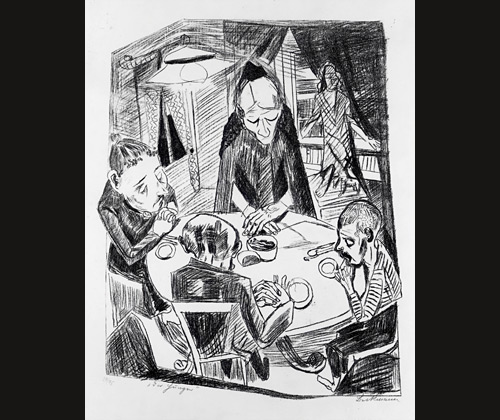
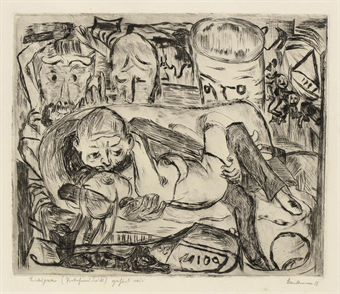
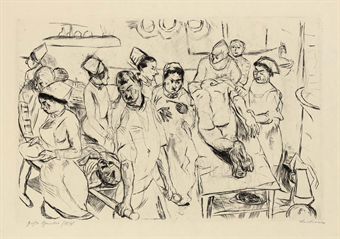
Hunger

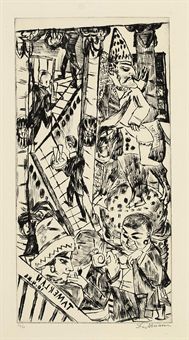
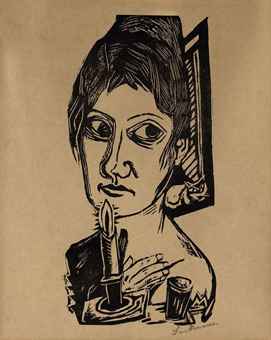
and City Night
in the early twenties had Beckmann resorted to such directness, such undisguised social criticism. Birds’ Hell is Beckmann’s J’accuse’ (S. Lackner, Max Beckmann, New York, 1977, p. 130).
Sotheby's 2016

Max Beckmann Schlafende am Strand (Quappi at the Beach) (1927& 1950) Estimate: £800,000-1,200,000
Schlafende am Strand was inspired by Beckmann’s visit to Rimini on the Adriatic coast of Italy, where he spent the summer of 1927 with his wife Quappi. Both

the initial sketch
and the painting remained first in the artist’s and then in Quappi’s possession until the end of her life, the drawing now forming part of the collection of Museum der Bildenden Künste in Leipzig. Quappi, who often featured as a model in Beckmann’s works, is depicted as an image of beauty and youth.The sense of simplicity and joie de vivre is palpable as the artist centres his attention on depicting the simple pleasure of lying on a sunny beach.
SOTHEBY’S TO SELL ONE OF THE GREATEST GERMAN PAINTINGS LEFT IN PRIVATE HANDS MAX BECKMANN’S SELF-PORTRAIT WITH HORN TO BE OFFERED FROM THE COLLECTION OF HIS LIFE-LONG PATRON ON THE EVENING OF MAY 10TH 2001
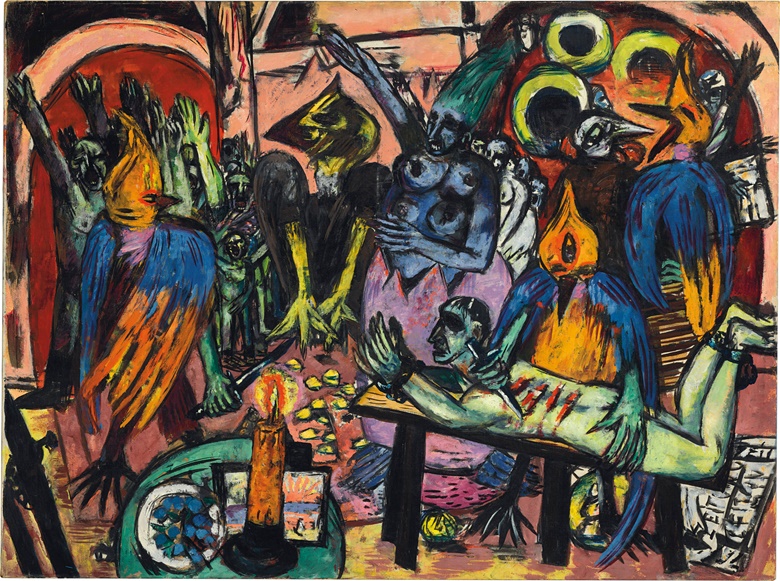
A visionary approach is also seen in the allegory of Max Beckmann’s political masterpiece Birds’ Hell (Hölle der Vögel) (1937-1938, estimate on request), a searing indictment of the Nazi Party and a personal outpouring of anguish akin to

Picasso’s Guernica (1937).
Birds’ Hell (Hölle der Vögel) is ‘an allegory of Nazi Germany. It is a direct attack on the cruelty and conformity that the National Socialist seizure of power brought to Beckmann’s homeland. Its place in Beckmann’s oeuvre corresponds to that occupied by Guernica in Picasso’s artistic development. It is an outcry as loud and as strident as an artistic Weltanschauung would permit. Not since his graphic attacks in
Hunger

and City Night
in the early twenties had Beckmann resorted to such directness, such undisguised social criticism. Birds’ Hell is Beckmann’s J’accuse’ (S. Lackner, Max Beckmann, New York, 1977, p. 130).
Max Beckmann’s Bird’s Hell (1938, estimate on request) will lead 20th Century at Christie’s, a series of sales that take place from 17 to 30 June 2017, in the Impressionist & Modern Art Evening Sale on 27 June 2017, when it will be offered at auction for the first time. One of the most powerful paintings that Beckmann created while in exile in Amsterdam it presents a searing and unforgettable vision of hell and is poised to set a world record price for the artist at auction. Begun in Amsterdam and completed in Paris at the end of 1938, this work ranks amongst the clearest and most important anti-Nazi statements that the artist ever made, mirroring the escalating violence, oppression and terror of the National Socialist regime.
Painted with vigorous, almost gestural brushstrokes and bold, garish colours, Bird’s Hell envelops the viewer in a sinister underworld in which monstrous bird-like creatures are engaged in an evil ritual of torture. Presiding over the scene is a multi-breasted bird who emerges from a pink egg in the centre of the composition. To her right, a crouching black and yellow bird looms over golden coins spread before him, while behind the central figure, a group of naked women stand huddled together. Heightening the sense of hysteria is the group of figures standing within a glowing, blood red doorway to the left of the composition. Guarded by another knife-wielding bird, they return the bird-woman’s gesture, their right arms raised in unison in the same furious salute. At the front of the scene, a naked man – the symbol of innocence within this reign of terror – is shackled to a table, held down by another bird that is slashing his back in careful, horizontal lines.
Continuing the Germanic tradition of the depiction of hell, this painting echoes the gruesome allegorical scenes of Hieronymus Bosch’s famed The Garden of Earthly Delights, while at the same time, takes aspects of Classicism and mythology to turn reality into a timeless evocation of human suffering. In this way, Bird’s Hell, like Pablo Picasso’s Guernica or

Max Ernst’s Fireside Angel of the same period, transcends the time and the political situation in which it was made to become a universal and singular symbol of humanity.
Max Ernst’s Fireside Angel of the same period, transcends the time and the political situation in which it was made to become a universal and singular symbol of humanity.
Sotheby's 2016

Max Beckmann Schlafende am Strand (Quappi at the Beach) (1927& 1950) Estimate: £800,000-1,200,000
Schlafende am Strand was inspired by Beckmann’s visit to Rimini on the Adriatic coast of Italy, where he spent the summer of 1927 with his wife Quappi. Both

the initial sketch
and the painting remained first in the artist’s and then in Quappi’s possession until the end of her life, the drawing now forming part of the collection of Museum der Bildenden Künste in Leipzig. Quappi, who often featured as a model in Beckmann’s works, is depicted as an image of beauty and youth.The sense of simplicity and joie de vivre is palpable as the artist centres his attention on depicting the simple pleasure of lying on a sunny beach.
SOTHEBY’S TO SELL ONE OF THE GREATEST GERMAN PAINTINGS LEFT IN PRIVATE HANDS MAX BECKMANN’S SELF-PORTRAIT WITH HORN TO BE OFFERED FROM THE COLLECTION OF HIS LIFE-LONG PATRON ON THE EVENING OF MAY 10TH 2001
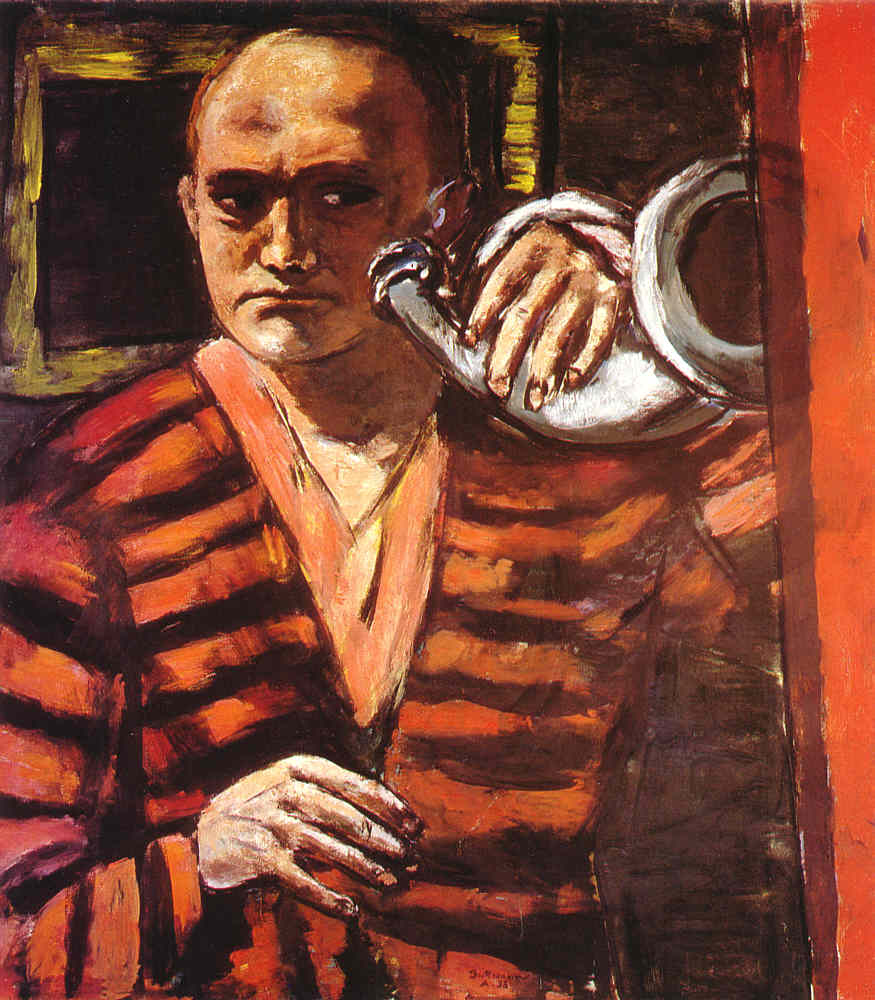
On the evening of May 10, 2001 Sotheby’s in New York will offer for sale one of the greatest German paintings left in private hands, Max Beckmann’s Self-Portrait with Horn. Painted in Amsterdam in 1938, when Beckmann was in exile following the appearance of his name on the Nazi list of “degenerate”artists, the painting is being sold from the estate of his life-long patron, the late Dr. Stephan Lackner. The work, which is estimated to sell for $7/10 million, will be included in Sotheby’s sale of Impressionist and Modern Art Part I. The portrait will be on view in Los Angeles, San Francisco, London, Paris, Zurich, Munich and Cologne prior to its exhibition and sale in New York.
Stephane Connery, Senior Vice President in Sotheby’s Impressionist and Modern Art department, said, “Self-Portrait with Horn is an icon of 20th century art, and certainly the most important German painting to come up for auction in living memory. This resonant and powerful work is one of the artist’s most important and magnificent self-portraits, a compelling statement of 20th century artistic independence under oppression. The visceral power of this masterpiece is further enhanced by its matte surface and lively impasto, and by the fact that it is in extremely desirable condition, having remained both unvarnished and unlined.”
The work, which has been exhibited widely from late 1930s to the late 1990s, also appears on the cover of the artist’s catalogue raisonné.
Max Beckmann was the most important German Modernist artist working between the wars. He was approaching the peak of his career –with a major retrospective and permanent museum exhibitions of his work --when the National Socialist party came to power in Germany in 1933. In 1937 ten of Beckmann’s paintings were included in the notorious “Entartete Kunst”(“Degenerate art”) exhibition in the Munich Arkaden, and the artist fled with his wife to Amsterdam. It was at this point that Beckmann undertook Self-Portrait with Horn.
In Self-Portrait with Horn, Beckmann depicts himself alone in a confined, narrow space holding a Waldhorn (German hunting horn) in his left hand and wearing a black-and red-striped housecoat.
Stephane Connery has written that “in the composition the artist has created a penetrating self-image that lies on threshold between darkness and light, pessimism and hope, self-doubt and self-knowledge.”The psychological effect of the work is compounded by the inclusion of the hunting horn, which in German literature and painting was used as a symbol of Romanticism. Beckmann’s nostalgia for his homeland during his exile is apparent by his use of this attribute. Remarkably, a photograph preserves for us an earlier stage of this work in which the artist is smiling, apparently enchanted by the horn’s melody. The final version reflects a profound shift in attitude and mood, with the artist’s smile having been replaced by a melange of doubt, bitterness, disappointment, and uncertainty.
Stephane Connery continued, “Self-Portrait with Horn can also be read as a silent victory call after a very particular ‘hunt’. Through his craft and artistry, Beckmann has escaped the clampdown of the National Socialist regime and the increasing constraint resulting from the public disgrace under which many of his fellow artists were living and working in Germany.”
Stephen Lackner was born in Paris in 1910 and spent most of his childhood in Germany. In the 1930’s he began a great friendship with Max Beckmann, and there commenced a wonderful patronage that resulted in Lackner’s ownership of 69 paintings by the artist, including 2 triptychs. Self-Portrait with Horn was purchased in Paris in 1938 and remained the jewel in the crown of Dr. Lackner’s collection until his death in December 2000.
In the book he wrote on Beckmann, Dr. Lackner describes the work that he studied so closely and faithfully in the more than fifty years that he owned it: “In Self-Portrait with Horn, a very lonely man stares out of the canvas. The painting is among the most melancholy, and perhaps the deepest, of Beckmann's many studies of his own persona. The man does not look at himself in the mirror, nor at the spectator before the canvas; his gaze follows the resonance of a horn call, which he has just sent out like a message. He seems to listen for a distant echo. But there is no response, only a great silence. Here is a man forsaken by his time. No furnishings, no amenities of civilization, just an empty frame remains behind him. His strange, timeless costume seems to combine harlequin and convict associations. The richly colored stripes are a marvel of pure painterly accomplishment, almost reverting to some organic phenomenon of nature. Their rippling rhythm is reminiscent of sound waves; their full, soft color corresponds to the timbre of the horn call.”
Christie's 2017
A visionary approach is also seen in the allegory of Max Beckmann’s political masterpiece Birds’ Hell (Hölle der Vögel) (1937-1938, estimate on request), a searing indictment of the Nazi Party and a personal outpouring of anguish kin to
Picasso’s Guernica (1937).
Birds’ Hell (Hölle der Vögel) is ‘an allegory of Nazi Germany. It is a direct attack on the cruelty and conformity that the National Socialist seizure of power brought to Beckmann’s homeland. Its place in Beckmann’s oeuvre corresponds to that occupied by Guernica in Picasso’s artistic development. It is an outcry as loud and as strident as an artistic Weltanschauung would permit. Not since his graphic attacks in
Hunger
and City Night
in the early twenties had Beckmann resorted to such directness, such undisguised social criticism. Birds’ Hell is Beckmann’s J’accuse’ (S. Lackner, Max Beckmann, New York, 1977, p. 130).
Christie's 2017
A visionary approach is also seen in the allegory of Max Beckmann’s political masterpiece Birds’ Hell (Hölle der Vögel) (1937-1938, estimate on request), a searing indictment of the Nazi Party and a personal outpouring of anguish kin to
Picasso’s Guernica (1937).
Birds’ Hell (Hölle der Vögel) is ‘an allegory of Nazi Germany. It is a direct attack on the cruelty and conformity that the National Socialist seizure of power brought to Beckmann’s homeland. Its place in Beckmann’s oeuvre corresponds to that occupied by Guernica in Picasso’s artistic development. It is an outcry as loud and as strident as an artistic Weltanschauung would permit. Not since his graphic attacks in
Hunger
and City Night
in the early twenties had Beckmann resorted to such directness, such undisguised social criticism. Birds’ Hell is Beckmann’s J’accuse’ (S. Lackner, Max Beckmann, New York, 1977, p. 130).
Max Beckmann’s Bird’s Hell (1938, estimate on request) will lead 20th Century at Christie’s, a series of sales that take place from 17 to 30 June 2017, in the Impressionist & Modern Art Evening Sale on 27 June 2017, when it will be offered at auction for the first time. One of the most powerful paintings that Beckmann created while in exile in Amsterdam it presents a searing and unforgettable vision of hell and is poised to set a world record price for the artist at auction. Begun in Amsterdam and completed in Paris at the end of 1938, this work ranks amongst the clearest and most important anti-Nazi statements that the artist ever made, mirroring the escalating violence, oppression and terror of the National Socialist regime.
Painted with vigorous, almost gestural brushstrokes and bold, garish colours, Bird’s Hell envelops the viewer in a sinister underworld in which monstrous bird-like creatures are engaged in an evil ritual of torture. Presiding over the scene is a multi-breasted bird who emerges from a pink egg in the centre of the composition. To her right, a crouching black and yellow bird looms over golden coins spread before him, while behind the central figure, a group of naked women stand huddled together. Heightening the sense of hysteria is the group of figures standing within a glowing, blood red doorway to the left of the composition. Guarded by another knife-wielding bird, they return the bird-woman’s gesture, their right arms raised in unison in the same furious salute. At the front of the scene, a naked man – the symbol of innocence within this reign of terror – is shackled to a table, held down by another bird that is slashing his back in careful, horizontal lines.
Continuing the Germanic tradition of the depiction of hell, this painting echoes the gruesome allegorical scenes of Hieronymus Bosch’s famed The Garden of Earthly Delights, while at the same time, takes aspects of Classicism and mythology to turn reality into a timeless evocation of human suffering. In this way, Bird’s Hell, like Pablo Picasso’s Guernica or
Max Ernst’s Fireside Angel of the same period, transcends the time and the political situation in which it was made to become a universal and singular symbol of humanity.
Max Ernst’s Fireside Angel of the same period, transcends the time and the political situation in which it was made to become a universal and singular symbol of humanity.
Sotheby's 2014

LOT SOLD. 1,025,000 USD
Sotheby's 2013

A canvas painted in New York by German Expressionist painter Max Beckmann (1884-1950) Vor dem Ball (Zwei Frauen mit Katze), or Before the Ball (Two Women with a Cat), from 1949 and offered by a private party, is estimated to bring $8-$12.8 million at Sotheby's Impressionist and modern art evening sale on Feb. 5, 2013.
If the estimated price is achieved, it will put the painting among the top Beckmann canvases sold at auction, according to statistics from Artnet.com. His Self-portrait with Horn (1938) sold in 2001 at Sotheby's for $22.6 million; Self-portrait with Crystal Ball (1936) brought $16.8 million at Sotheby's in 2005; and Still Life with Gramophone and Irises (1924) went for $7.3 million at Christie's in 2007. Those are all oils on canvas, like Vor dem Ball, and slightly smaller than the 1949 work, which measures 56 by 39 inches.
If the estimated price is achieved, it will put the painting among the top Beckmann canvases sold at auction, according to statistics from Artnet.com. His Self-portrait with Horn (1938) sold in 2001 at Sotheby's for $22.6 million; Self-portrait with Crystal Ball (1936) brought $16.8 million at Sotheby's in 2005; and Still Life with Gramophone and Irises (1924) went for $7.3 million at Christie's in 2007. Those are all oils on canvas, like Vor dem Ball, and slightly smaller than the 1949 work, which measures 56 by 39 inches.
Christie's 2013

Christie's 2012


Christie's 2010


Christie's 2008

Christie's 2007


Nhận xét
Đăng nhận xét