The Abelló Collection: A Modern Taste for European Masters -Bacon, Braque, Canaletto, Dalí, Degas, Goya, El Greco, Matisse, and Picasso
The Meadows Museum at Southern Methodist University will present the first exhibition in the United States of paintings from the collection of Juan Abelló, who is considered one of the world’s top collectors. The Abelló Collection: A Modern Taste for European Masters will feature approximately 70 paintings spanning the 15th to the 20th centuries—including works by such Spanish masters as El Greco, Jusepe de Ribera, Francisco Goya, Salvador Dalí, and Pablo Picasso, as well as by other European artists including Georges Braque, Canaletto, Edgar Degas, Fernand Léger, Henri Matisse and Amedeo Modigliani, among others. The exhibition will feature Francis Bacon’s Triptych 1983, one of the artist’s final works in this iconic format. Also included will be an ensemble of 15 drawings by Pablo Picasso, representing all periods in his long career. On view from April 18 through Aug. 2, 2015, The Abelló Collection: A Modern Taste for European Masters, joins the Meadows’ ongoing series of international partnerships that are bringing Spanish masterworks to the U.S. The exhibition is a cornerstone to the Museum’s 50th anniversary celebration, which will continue throughout 2015.
Based in Madrid, Juan Abelló is one of Spain’s most prominent art collectors—and has been internationally recognized as one of the top 200 collectors in the worldsince he began collecting art over three decades ago. Along with his wife Anna Gamazo, Abelló has amassed more than 500 outstanding works of art spanning 500 years of European history. The Abelló Collection is grounded in the couple’s dedication to bringing great national works of art back to Spain that have been dispersed over time in the turmoil resulting from centuries of political and economic strife—from the Napoleonic invasion, to numerous historical financial crises. Abelló’s collecting bears a parallel to that of Meadows Museum founder and SMU benefactor Algur H. Meadows, who similarly devoted his fortune to the collection, study, and presentation of Spanish masterworks, and to strengthening international awareness of Spain’s robust cultural tradition.
Exhibition Highlights
The Abelló Collection: A Modern Taste for European Masters will be curated by Almudena Ros de Barbero, curator of the Abelló Collection, who served previously at the Musee du Louvre working on the opening of the new Spanish picture galleries, and later was a researcher at the Wildenstein Institute in Paris. Some of the paintings that will be featured in the exhibition are presently on display in Madrid as part of a larger series of exhibitions mounted by the city, “Patronage in the Service of Art.” In conjunction with the exhibition, the Meadows will produce a fully illustrated, English-language catalogue published by Ediciones El Viso.
Highlights of the Meadows Museum exhibition include:
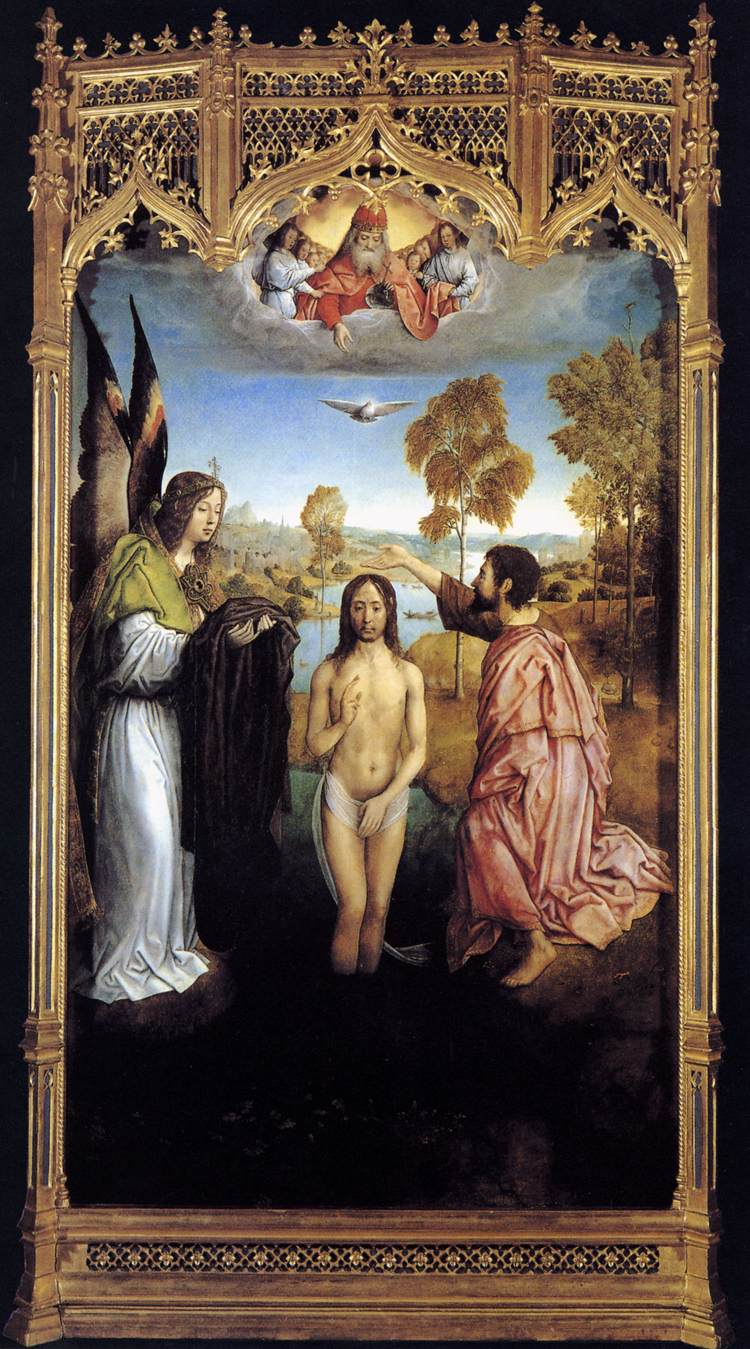
• Baptism of Christ by Juan de Flandes (c. 1496-99), the central panel in an altarpiece (now dispersed) devoted to St. John the Baptist that was originally located at the Carthusian Monastery of Miraflores in Burgos, Spain. With the precise technique typical of members of the Flemish school, Flandes created a work of vibrant luminosity, depicting a unique moment during which all three persons of the Holy Trinity were manifest.


• The Stigmatization of Saint Francis by El Greco (c. 1580), the first version of several variations of the artist’s renderings of this subject, including a later depiction entitled Saint Francis Kneeling in Meditation (1605-1610) housed in the Meadows’ permanent collection. Created shortly after El Greco arrived in Toledo, the work from the Abelló collection will provide visitors an opportunity to compare the iconographical and stylistic differences between the two works, and observe the evolution of El Greco’s artistic practice.
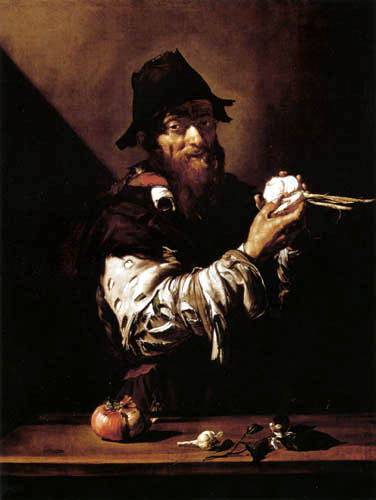
• The Sense of Smell by Jusepe de Ribera (c. 1615), part of the Five Senses series the artist created for Giulio Mancini, a prominent art writer, collector, and dealer who served as physician to Pope Urban VIII. A follower of Caravaggio, Ribera spent the majority of his working life in Italy, where he was known as “Lo Spagnoletto” or the “Little Spaniard.” This piece is a rare example of the artist’s early Roman period prior to his departure for Naples in 1616, where he would settle for the remainder of his career.


• A pair of portraits by Francisco Goya depicting his son Javier’s father-in-law, Martin Miguel de Goicoechea, and Martin’s wife, Juana Galarza de Goicoechea (both 1810). The pair particularly resonates with the Meadows’ collection, which features portraits of the couple’s daughter, Gumersinda, and the artist’s son. Javier and Gumersinda gave Goya his only grandson, Mariano, whose portrait was acquired by the Museum in 2013. Together, these works will offer a comprehensive picture of the artist and his legacy.

Canaletto, The Molo from the Bacino di San Marco, 1733/34. Oil on canvas, 48.5 x 80.5 cm. Collection Juan Abelló, Madrid.

Canaletto, The Molo from the Bacino di San Marco, 1733/34. Oil on canvas, 48.5 x 80.5 cm. Collection Juan Abelló, Madrid.

• Two vedute (views) by Giovanni Antonio Canal “Canaletto,” with views from the Grand Canal of Venice dated c. 1720, the period when Canaletto was at the height of his powers. These paintings depict several emblematic buildings of Venice, including the Piazza San Marcos, Palazzo Ducale, Biblioteca Marcina, and the Palazzo Corner della Ca’ Granda or Palazzo Barbarigo.


• The Cellist by Amedeo Modigliani (1909), with a portrait of Constantin Brancusi, the artist’s close friend and neighbor on the reverse. Brancusi quickly became a crucial influence in Modigliani’s life and work, encouraging the artist to investigate Cycladic sculpture. Modigliani’s fascination with this ancient Aegean culture resulted in a particularly productive period of his career between 1909 and 1915, in which he produced a number of sculptures with monumental and simplified forms. The double-sided painting will be displayed alongside two preparatory drawings for The Cellist and The Brancusi Portrait.


• Rum and Guitar by Georges Braque (1918), one of the artist’s Cubist pictures painted in the aftermath of World War I, during which he was severely injured. Prior to the war’s outbreak in 1914, Braque and Picasso jointly established Analytic and Synthetic Cubism and collage, signaling a particularly innovative period of the movement that lead to Braque’s first solo exhibition in Paris in 1908. This piece reflects the reemergence of Cubism after the War, when it began to coalesce as a defined artistic movement.


• Nu assis (Seated Nude) by Pablo Picasso (c. 1922-23), a nearly monochromatic work executed by Picasso during a period when he returned to classicism—in this instance, referencing the iconography of Venus before the mirror. The linear strokes of charcoal outlining the figure and the thick application of white paint on bare canvas give the work volume and confer an almost sculptural quality.

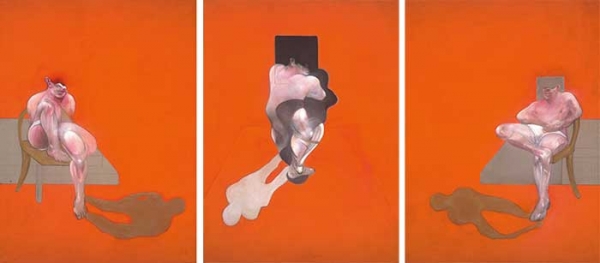
• Triptych 1983 by Francis Bacon (1983), one of Bacon’s final works in this iconic format, which references both the popular Renaissance composition and the modern inventions of photography and cinema. The Abelló Collection houses an extensive repertoire of Bacon’s work, and Juan Abelló is the only Spanish collector who owns multiple pieces by the artist. Triptych 1983 serves as a capstone to the Meadows exhibition and the Abelló collection as a whole.
Nhận xét
Đăng nhận xét