Sotheby’s Impressionist & Modern Art Evening Sale on 24th June 2015


Sotheby’s Impressionist & Modern Art Evening Sale on 24th June 2015 will feature Le Bar aux Folies-Bergère of 1881 by Édouard Manet, estimated at £15-20 million/ $23-30.7 million / €21-28 million depicting one of the artist’s most celebrated and iconic subjects.
In his celebrated evocation of the Folies-Bergère scene Édouard Manet produced from an everyday setting an iconic image of modern Paris. This is one of only two paintings by Manet of the Folies-Bergère - the other housed at the Courtauld Gallery in London –and therefore the only version remaining in private hands.
The Evolution of Manet’s Le Bar aux Folies-Bergère
Manet turned to the theme of bars and café-concerts in the late 1870s as inspiration for his paintings, which reached a climax in the subject depicted in Le Bar aux Folies-Bergère.
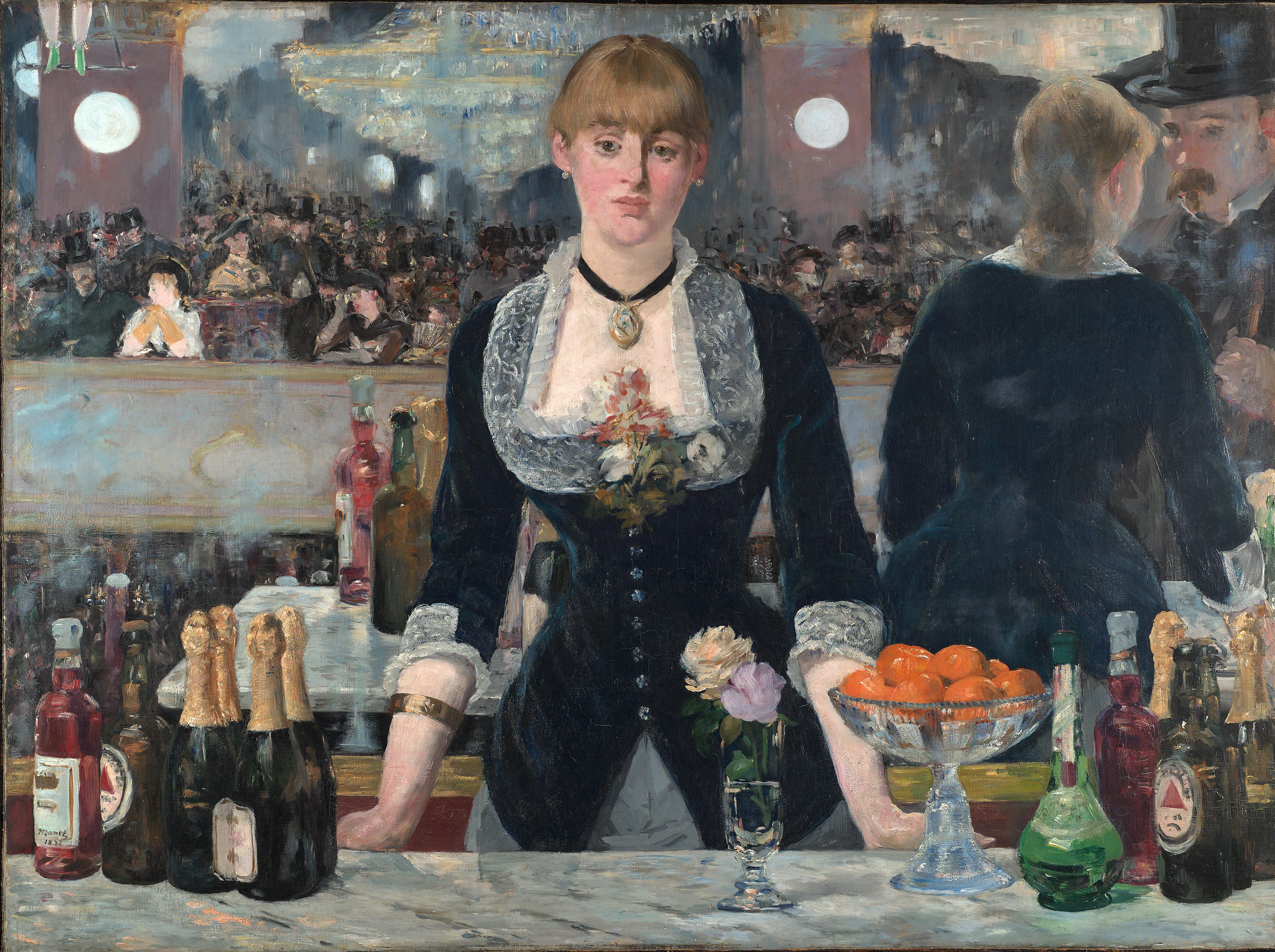
His celebrated large-scale oil of the same title, exhibited at the Salon of 1882 and now in the collection of the Courtauld Gallery, London, is considered the crowning achievement of Manet’s career. While the two related paintings share the same subject and a similar composition, the artist’s stylistic approach to painting them differed significantly. Unlike the painting in the Courtauld, this smaller, earlier painting (47 by 56cm) displays a remarkable vivacity and immediacy in the artist's depiction of his subject, and is executed with quick, spontaneous brushstrokes that remained barely altered as Manet developed the composition. In the mid-1980s X-ray-based research revealed further differences in approach and techniques employed. Interestingly, beneath the surface of the Courtauld painting lies a composition that resembles the earlier painting much more closely. Manet initially transferred the composition of the earlier work to the larger canvas, and over a longer period of time made numerous changes that led to the final image: he enlarged the figure of the barmaid and depicted her in the center of the composition frontally, replacing her clasped arms with straight ones and moving the barmaid’s reflected image to a less logical position on the right, whereas the image of her male companion was moved further up into the top right corner. In the process Manet substituted the immediacy of the earlier painting -in which reality is transcribed with a wonderful vibrancy and freedom -for a composition in which the reflections of the two figures become picturesque but implausible.
The Subject of Le Bar aux Folies-Bergère
The Folies-Bergère, a Parisian variety theatre, was opened in 1869 on the rue Richer. It offered a combination of pantomime, ballet, acrobatics and music, with many bars “tended by charming girls whose playful glances and delightful smiles attract a swarm of customers”, according toone contemporary account. Manet made various sketches there, and the painting to be offered was based on an ink sketch depicting a barmaid engaged in a conversation with a man, both figures reflected in the mirror behind her. Previous ownership Le Bar aux Folies-Bergère remained with the artist until his death when it was inherited by his widow, Suzanne Manet (née Leenhoff). It was subsequently given to Edmond Bazire, a friend of Manet’s who had written the first monograph on the artist’s work in 1884. The painting was eventually procured by Paul Durand-Ruel from whom the renowned Viennese art collector Dr Hermann Eissler acquiredthe painting. In 1926 Franz Koenigs, one of the leading collectors of his day, bought the work through the Amsterdam branch of Paul Cassirer's dealership, which had it on consignment from the estate of Dr Eissler's brother Dr Gottfried Eissler. While much of Koenigs’ collection is now housed in Rotterdam's Museum Boymans, this painting by Manet remained in the family’s own personal collection until 1994 when it was last sold at Sotheby’s London for £4.4 million. It was later acquired by the present owner.
Christie’s Evening Sale of Impressionist and Modern Art on Wednesday, 5 November 2014

EDOUARD MANET’S, LE PRINTEMPS, 1881
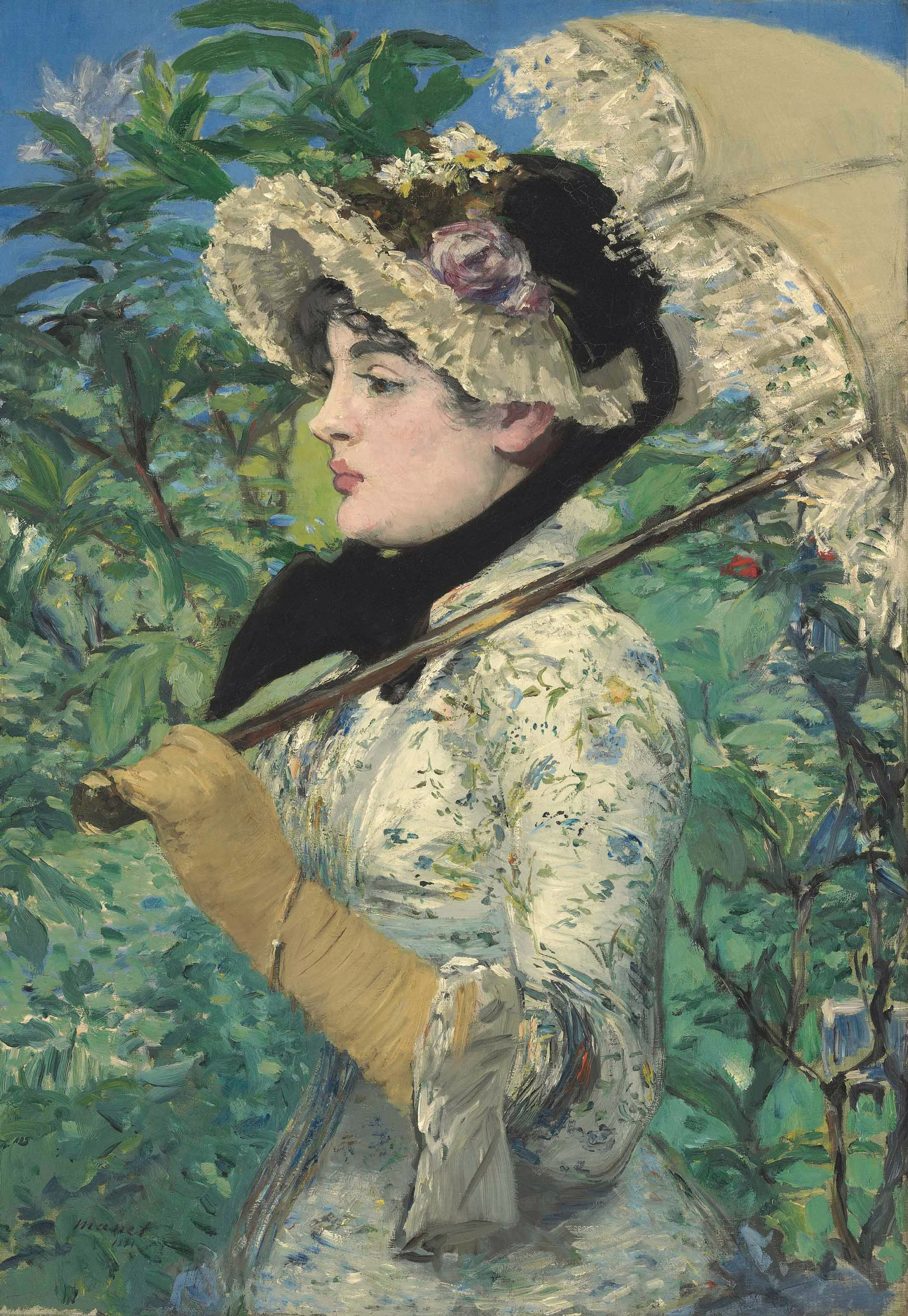
EDOUARD MANET’S, LE PRINTEMPS, 1881
Edouard Manet’s masterpiece portrait, Le Printemps (estimate: $25-35 million).
Encapsulating all the major themes of the early modern period, from nature and femininity to society and fashion, Springtime is one of Manet’s best known and most widely reproduced works, and perfectly exemplifies the revolutionary style that Manet embraced.
Encapsulating all the major themes of the early modern period, from nature and femininity to society and fashion, Springtime is one of Manet’s best known and most widely reproduced works, and perfectly exemplifies the revolutionary style that Manet embraced.
- The portrait depicts the actress Jeanne Demarsy, cast as an allegory of spring. She also appears in the background of Manet’s iconic scene Un bar aux Folies-Bergere. Both paintings were exhibited at the Paris Salon of 1882, and together they sealed Manet’s fame as a titan of modern-era painting.
- This masterwork comes completely fresh to the market, having remained in the same collection for over a century and been on loan for the last two decades at the National Gallery of Art in Washington D.C. Of the 30 paintings that Manet exhibited at the Salon over the course of his lifetime, this is the last remaining in private hands.
- Brooke Lampley, Head of Impressionist and Modern Art comments, “On the heels of the fantastic traveling exhibition Impressionism, Fashion and Modernity, of which works by Manet were a keystone, we are delighted to have been entrusted with the sale of Le Printemps. This painting is by the first artist of the modern era, encapsulating all major themes of the early modern period, from nature and femininity to societyand fashion.One of his best known and most widely reproduced works, Le Printemps exemplifies the revolutionary style that Manet embraced.”From the mid-1860s, Manet had established his reputation as the leading master of portraiture among the practitioners of “New Painting,” radically transforming its scope to embrace a dialogue between the traditional canon of art history and contemporary Belle Époque Paris. Actress Jeanne Demarsy is cast as an allegory of spring, a theme artists embraced since antiquity, yet executed in the artist’s ground-breaking painterly style and in a vanguard setting.With an eye to Goya and early Renaissance portraits of young noblewomen, Manet posed Jeanne in profile. He evoked the arrival of spring in his treatment of Jeanne’s specially designed flowered dress, her lacy parasol, her bonnet regaled with blossoms, and the profuse verdant foliage of rhododendrons he painted behind her. Of the four seasons, Manet completed only Le Printemps and L’Automne,)Musée des Beaux-Arts of Nancy).Adrien Meyer, International Director, comments, "In this breathtakingPainting Manet depicts a coquettish but self-assured Jeanne Demarsy as Spring. His distinguished use of black anchors the painting and emphasizes Jeanne's fragility. Manet projects in this masterpiece an idea of the modern woman, feminine and free, attracting yet deflecting the gaze of the viewer. Le Printemps is one of the last museum-quality works by Manet to come to auction. When again will the market offer a picture that truly made Impressionist history?”Le Printemps was exhibited at the Paris Salon of 1882, along with Un bar aux Folies-Bergère–the supreme masterpiece of Manet’s oeuvre. Previously, the official Salon system in France had thwarted Manet’s hopes and plans for public success, recognition, and acceptance throughout his career. The submission of these two paintings, however, only a year before the artist’s premature death, would prove triumphant and potentially redefine Manet’s legacy. The works were enthusiastically received and led to a wide-spread call for reproduced images of both.
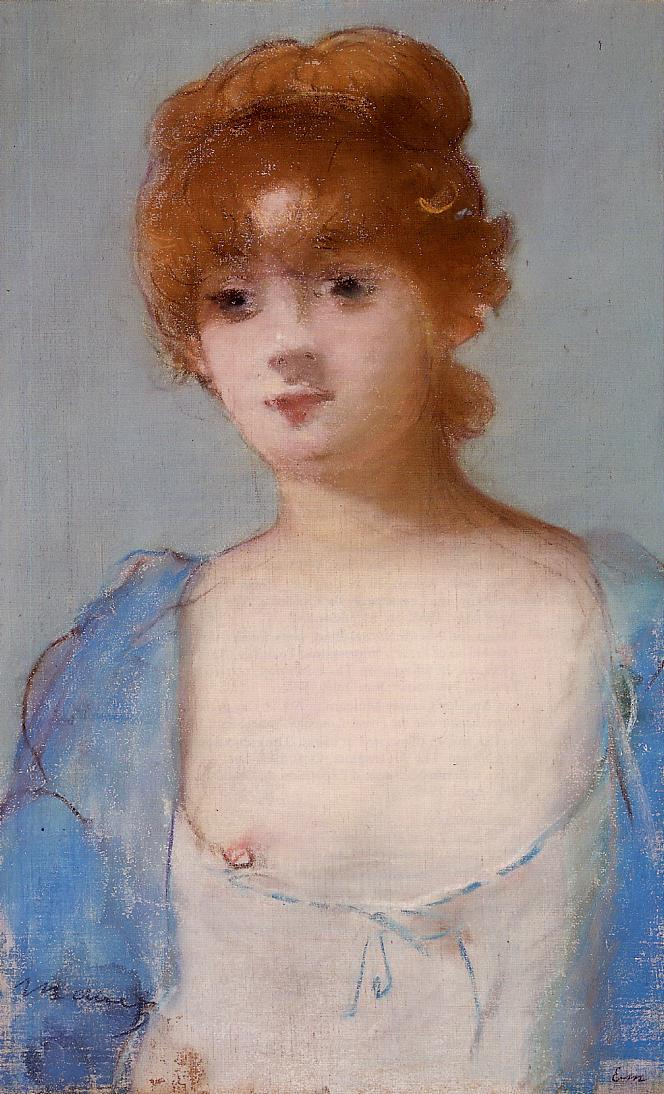
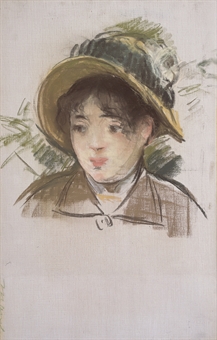
Sotheby's February 2011Édouard Manet (1832 - 1883), Jeune fille en déshabillé, 1882. Est: £1-1.5 million. Photo: Sotheby'sÉdouard Manet’s beautifully rendered pastel on canvas Jeune fille en déshabille, 1882 (est: £1-1.5 million) was previously owned by one of the first American collectors of Impressionist art, Mrs Thomas A. Scott, the wife of the president of the Pennsylvania Railroad. Bought on the advice of the Impressionist artist Mary Cassatt, the pastel depicts a model thought to bear resemblance to the actress Ellen Andrée, who is also believed to be the model for another Manet pastel in the collection of the Louvre and who famously sat for Degas’ L’Absinthe. As in some of Degas’s most sensitive pastel portraits, the model’s delicate beauty here is exquisitely captured. This evocative pastel featured in the first posthumous retrospective of Manet’s work in Paris in 1884.Sotheby's 2014 LOT SOLD. 3,525,000 USDSotheby's 2013LOT SOLD. 1,265,000Sotheby's 2010



Nhận xét
Đăng nhận xét